
Subscribe to continue reading
Subscribe to get access to the rest of this post and other subscriber-only content.

Posted in Food and Drink, Lifestyle
Tags
body, budget meals, conversation, emergency food, emergency-preparedness, Food, innovative, pantry, safety, survival, sustainability, sustainable living, Vegetables
As the global cost of living continues to bite, many of us find it increasingly important to have a supply of ingredients in our store cupboards that we can fall back on in case of any crisis, personal or more widespread, that may affect our ability to nourish and sustain ourselves and our loved ones (including our animals).
What would we do, for example, were there to be a sudden water contamination and our mains supply was unsuitable to drink? Are we concerned about the fluoridation of our water supply and its link to cognitive decline? What would we do were the water authority to turn off the supply in order to undertake essential mains works? This particular situation arose in our area in December last year and again in early 2023. When water is essential to our existence, I believe that having supplies of bottled water for everyday use and for emergencies is vitally important, as is maintaining a water butt or any other container outside to collect rainwater, if space allows.
If someone is suddenly coming to dinner and you don’t have an opportunity to hurry to the shops, or there is a more widespread supply problem for example, or the price of everything continues to escalate, how do you keep warm and put food on the table?
All these are questions we need to be thinking about and asking ourselves how we would deal with them and, indeed, anticipating them, not with the intention of inviting negativity to manifest itself but, in a more positive way, of being prepared for any eventuality and being in a position to provide for yourself and your household and loved ones, and perhaps being able to support your local community in some way, too, in the event of a crisis.
This is where budgeting, scratch cooking and emergency food prepping come into their own. There is a growing band of YouTubers such as myself focusing more on this area. As you may know, I have been sharing budget meals and self-sufficiency for a long while now, whether it be an inexpensive, wholesome lunch or supper, a 1940s-inspired recipe, or more recently fruit and vegetable gardening and the store cupboard. Here is one of my recent videos:-
Responding to the needs of my subscribers, I intend to focus more on budget meals and pantry prepping in the future as well as other areas of self-sustainability, such as gardening, foraging/free food, home-preserving, sprouting and fermenting, etc. One of my subscribers has asked me to feature more 1940s recipes as they feel that what we are all going through is akin to wartime living, as is the need to be ever more canny with what money we have, let alone put any aside for a rainy day which of course most of us aspire to.
Of course I will share some of my activities with you all, as well as my other content and trust that you might find it interesting and entertaining. However, if you don’t, no worries; it is a free world in my world!
I have started to participate in a couple of open collaborations with GrandmaSandy and others on YouTube, as well as seeking out other content creators who share my ideas and values and lifestyle choices. Grandma Sandy came across my @catevanscuisine channel some months ago and gave me a much-needed shout-out for which I am most grateful, and I am now paying it forward and giving a shout-out to a few of the wonderful YouTubers I subscribe to:-
https://www.youtube.com/@GrandmaSandy – Budget Meals, Pantry Prepping, Fairy Garden, Tea Tuesdays crafting and more
https://www.youtube.com/@Shortievaughn – “Crazy but not dangerous” (fab recipes and banter)
https://www.youtube.com/@thetomatolady – Grow Joyfully Homestead
https://www.youtube.com/@the.rural.tribeuk – rural living and veggie gardening
These are just a few of the wonderful people making a difference. Why not check them out?!
See you again soon and a big thanks to all my subscribers for your support.
Catherine
Choose an amount
Or enter a custom amount
Your contribution is appreciated.
Your contribution is appreciated.
Your contribution is appreciated.
DonateDonate monthlyDonate yearlyPosted in Food and Drink, Homegrown, Lifestyle
Tags
Food, Fruit, Fruit and Vegetables, Gardening, Grow your own, Homegrown, Recipe, Rhubarb, Salad, Tomatoes, Vegetables
September started well with beautiful warm, sunny weather right into the second week of the month, right up until we left for a week’s holiday in south-west Scotland. In fact, the temperatures were high enough that it was like being in the South of France, albeit more humid.
The herbs were doing well being in part sun-part shade, and I treated us to a new pot of garden mint from our local garden centre and which Dan potted up into a larger, terracotta pot so it has plenty of room to grow. My late mother had several mint bushes at the end of her garden and one of my favourite culinary memories growing up is of her homemade mint sauce to accompany Sunday lunch or cheap, slow cooked cuts of lamb. These days I use fresh mint leaves in a wide variety of ways including steeped in hot water as a healthful drink, raw in salads and chopped finely in vegetarian Indian and Middle Eastern recipes; mint is delicious in falafels or mixed with yoghurt as a dressing or dip.
August’s land cress had been eaten, thus I sowed some spinach seeds in the trough of my growing table at the start of the month. The seedlings are now starting to thrive as long as we manage to keep the slugs and snails off them.
The nasturtiums were only leafing but since we returned from holiday at the weekend more new flowers have appeared and more plants have started growing in the troughs. It is now the last week of September and Dan has already enjoyed some nasturtium leaves and petals in his lunchtime salads, though growth is now slowing as we head into early autumn.
2023 has been an excellent year for salad leaves in particular and we have enjoyed a wide variety of homegrown in salads and sandwiches. As well as the spinach seeds, I also sowed some more lettuce seeds in the troughs wherever there were gaps. As long as I start to cover them with fleece for frost protection they should keep growing all winter.
The kale is also flourishing and we have had some of it chopped and lightly steamed with leftovers left to ‘fester’ for a couple of days in the refrigerator with cooked potatoes and then fried as bubble and squeak, which we enjoy with fried free range eggs for breakfast or a simple supper.
Before we went on holiday, Dan picked all the beetroot and weed potatoes and we stored them in a cool place in hessian sacks. To be honest, the beetroot didn’t last long; some we ate roasted or steamed and I sliced and pickled some of the steamed ones for later on in the year, and others I gave to my piano teacher, Jake, and our cleaner friend Val, along with kale, beetroot tops (which are a good substitute for spinach and Swiss chard in recipes), potatoes and rhubarb.
In fact, since we have returned from Scotland the rhubarb has once again expanded and we may need to cut it back yet again. Our gardener Lorraine will move the rose bush in November, and will plant the one currently in a plant pot on my great-uncle’s grave. My lovely cousin Agnes gave me a fragrant yellow rose bush for my special birthday called “Golden Memories”, and Dan is going to plant it in the new designated area. All our rose bushes are traditional, sweet-smelling ones and should make a breathtaking display next summer. Recently, we have enjoyed several vases from the rose bushes that are already well-established. We may still also ask Lorraine to split the rhubarb crowns and plant ones elsewhere, perhaps at the end of the garden near the greenhouse, or perhaps we will give away what we cannot easily accommodate.
The quinces are swelling nicely on the tree, though some of the fruits have grown rotten on the bough. However, I have picked a few lovely ones already, as well as a couple of windfalls and we should have another excellent crop this year. I usually enjoy making jars of membrillo (traditional Spanish quince paste), which goes well with cheese, nut roasts and charcuterie. Sometimes I add quince pulp just as it is to a homemade nut roast and this year I am going to try adding some to marrow chutney.
The courgettes are still thriving and most have not been devoured by garden ‘pests’; in the space of a week one of the courgettes had become an enormous vegetable marrow! I cut a small piece off the marrow last night to put in our suppertime vegetable pasta bake and Dan’s salad lunch box for today, and most of it is still sitting enormously in our ‘fridge; later in the week, most of it will become chutney.
The tomatoes have cropped incredibly well this year, with no sign of the tomato blight that spoiled last year’s crop. Before our holiday, I made a tasty tomato sauce for pasta and other dishes and we had most of that last night in the pasta bake and I am having the rest to accompany my beanburger this evening, as Dan is staying overnight at his mum’s due to his work schedule. After supper, I will be making a big batch of tomato chutney, which I prepared earlier this afternoon and takes about an hour to cook on the stove.
Needless to say, we are looking forward to more tasty pickings as the month draws to a close and it will be interesting to see what October brings.
Catherine (26 Sep 2023)
Tags
Berries, Carrots, Food, Fruit, Fruit and Vegetables, Gardening, Grow your own, Healthy Living, Herbs, Homegrown, Potatoes, Raspberries, Tomatoes, Vegetables
Early July started as June had ended with changeable weather. I was staying in Richmond-upon-Thames with my mother-in-law “MIL”, Verna, thus Dan was entirely in charge of the garden until he arrived to pick me up on the afternoon of 4th July. During my absence he had picked a few black raspberries that had ripened and some redcurrants, though the second batch of redcurrants we picked later on in July was a smaller one and sadly the whitecurrants amounted to nothing.
The Heritage beetroot were coming along well though their leaves were looking a little tatty but nothing a little plant food wouldn’t cure and they recovered well. By now in mid-August we have already picked a few; a few golden beet, a candy stripe, a white and a red one. A couple of them had been munched a little by slugs or snails but washed and with those bites chopped out they have been perfectly delicious chopped and lightly pickled in a drizzle of home-produced raw apple cider vinegar or grated salads, with their spinach-like leaves washed and shredded, added to salads and curries.
The “weed” potatoes have continued to flourish and earlier in July, Dan harvested some and we enjoyed these at mealtimes. Funnily enough, it looks like more of these plants are cropping up in other places in that bed so we may have a good potato harvest entirely by fluke!
The beans and peas produced a very small though delicious crop, despite being trampled on by our two adopted cats, Arthur and Miss Robyn Guinevere. Our senior boy, Merlin, appears to be more enlightened and leaves our crops alone though enjoys a wander or two in the garden and a rest on the patio most days; he was always more of a house cat in his nature.
Later in June of our elderly neighbours who lives further along the street had given us a courgette plant and some tomato plants and they had bedded in really well. We are growing a wide variety of tomatoes this year, from plum to salad varieties to cherry tomatoes perfect in salads or for snacking. Once I had returned from Richmond I stopped by for a chat and she invited me in to see her garden. She has a big birthday later this year yet shows no sign of discarding her green fingers, and her ability to be sustainable and grow all she needs is impressive. She has some really inventive methods of growing fruit and vegetables and not one area of her garden is an empty space but is well-utilized. I believe gardening helps to keep her positive and young at heart and she even has carefully thought-out areas for her beloved cat Monty to enjoy.
The blueberry plant is still young and there will be no crop this year, but it is thriving among the pine needles. The plant produced a single berry which we shared. It was full of flavour and we look forward to more next year.
The second crop of radishes failed miserably. They were flourishing in July and despite being thinned out, most failed to swell or develop. Perhaps it was the soil or the weather, or perhaps it was a combination of both. One reason for radishes not developing can be if the soil is too compact or if it contains excess nitrogen. The soil was loose enough and as we have usually grown radishes in the ground in previous years, we can only assume too much nitrogen was present in the soil and in future when growing radishes in containers we will add some mulch, which should help to rectify the problem.
The butterhead lettuces were a tasty success and were picked for salads during the course of July but the second batch of seeds did not produce the hoped-for rocket as we had a rainy spell towards the end of the month and the slugs and snails stripped the rocket and the underwhelming radishes bare, so all was lost, and the nasturtiums were looking glum though a few of those have rallied round after another plant feed.
The rhubarb has cropped amazingly well this year. We have picked rhubarb every month since May right up to about a week ago. Last year the crowns were new and it was important to leave them to settle in, so this year has been their first harvest. I have chopped a lot of the July and August rhubarb into 1″-2″ chunks and stored in a big bag in the freezer for future recipes, including pies and chutneys, so we can still enjoy it once summer is long gone.
We picked some of the Heritage beetroot and all of the speciality globe carrots, all of which were delicious. The beetroot crop comprises a wide variety of types; we have white, red, golden and candy stripe. They have been pickled, grated in salads and roasted as part of a main dish with other vegetables. It is now early September and I have cooked the last of what we had picked so it’s time to pull up some more! Stored correctly or preserved and pickled they should last us through the winter months.
In August I sowed some cut-and-grow salad leaves and some land cress. The land cress is all used up now, as are some of the fast-growing salad leaves, so I have sown some more leaves along with some spinach to keep us going for the next few weeks, as we eat salad for lunch every day.
Whilst making the August video we came across some wilded blackberries nestled among our redcurrant and black raspberry canes, a sheer delight! We love blackberries made into jam or in pies and crumbles, and they are also a good accompaniment to game, which Dan enjoys. We also enjoy them just as they are, freshly picked.
If you do not already grow any of your own produce, I hope our garden project has been inspiring you to give homegrown a try.The main thing to note is that home produce is of course at is freshest, can just be picked whenever it is needed and is way more flavourful than shop bought, which tends to be picked before it is ripe and is often stored or treated with chemicals or preservatives for a longer shelf life and therefore isn’t as fresh as homegrown or, say, foraged or purchased from a local farm shop for example. If you don’t object to finding pests in leaves and salad greens or having to wash the soil off your root vegetables, and if you have any amount of space to grow your own – even if it’s just a window box or a few plant pots or other containers – then I think homegrown is definitely the way to go.
Happy gardening!
C
Posted in Homegrown, Lifestyle, Uncategorized
Tags
Berries, body, Food, Gardening, Healthy Eating, Healthy Living, Homegrown, Nutrition, Potatoes, Salad, Seasonal, Tomatoes, Vegetables
Spring was late this year, we estimate most things are 2-3 weeks behind in growing time and despite some obvious challenges, it has not deterred us.
Dan and I have grown our own produce ever since we had our first flat together in Isleworth 16 years ago, though I personally have been growing fruit and vegetables since the mid-1990s after I left my long-term partner at the time and moved into a rented house in South Derbyshire. The property had a garden with a greenhouse and a lawn, and a shared accessway with my neighbours in the small row of railway cottages we occupied.
I started off with tomatoes and bell peppers in the greenhouse and soon discovered I had ‘green fingers’ as the space became full and I would engage in exchange and barter schemes with a couple of my neighbours who had allotments across the road from the cottages. Those allotments were on fertile land by the canal and there was a long waiting list but in any case in those days I worked full-time and therefore did not have sufficient time to invest in a large growing project, but the seeds were sown and I had fallen in love with gardening and the whole ethos behind home-produced.
Over the winter months of 2022/23 in the midst of the global cost-of-living crisis and mindful of the need for tightening our money belts, Dan and I spent some time discussing and planning what we would grow this year in an effort to become even more sustainable and self-sufficient. Although we grew a variety of fruit and vegetables last year, we knew our garden was capable of accommodating more, even with one of our two raised beds being purposely left fallow for the whole growing season to allow the soil to regain its nutrients. The continuous growing of crops eventually depletes the soil of certain nutrients, resulting in the fall in crop yield. This means that manure or fertilizers need to be added to the soil in order to replenish it with the nutrients it has lost.
There are a number of disadvantages of adding fertilizers to soil. Expensive to buy, they they are easily washed away by water and reduce the fertility of the soil. Also, they harm the microbes naturally present in soil and cause pollution. In general, fertilizers provide only a short-term fix as they also tend to change the nature of the soil, making it either too acidic or too alkaline, although some plants may thrive in one or the other. For example, blueberries must grow in acid (ericaceous) soil or potting compost with a pH value of 4.5-5.5. Our blueberry plant is happy in a corner of our garden near our quince tree among a nest of pine needles.
Over winter I ordered four wooden self-assembly ‘growing tables’ (80 x 40 x 75 cm). Made from 100% FSC sustainably sourced wood, the design comprises a trough on legs for easy-working height with a shelf underneath, from Homebase and these cost around £37 each, although the price has since gone up to £45. These I had home-delivered and Dan put them together, two for our patio and two for our greenhouse. We then lined the troughs with black membrane and filled them with topsoil. Two have since collapsed due to warpage, and so far Dan has mended one of them and we have some plastic troughs on the patio containing various salad goodies. We store and thoroughly wash and reuse all our pots and other growing containers until they fall apart, so fortunately when the tables collapsed we had other containers ready to hold the plants that had endured a nasty shock.
My main project is tending the herb garden and the salad goodies while Dan focuses on the rhubarb, the soft fruit and the vegetables in the other raised bed which needs heavy digging and with my back problems is something I am not capable of, though I do help out from time to time.
We sowed and propagated a variety of lettuce and tomato seeds indoors throughout March as the weather was still too cold to sow directly into the raised bed or any container outside, and more seeds – jalapeno, salad leaves, bell peppers = were sown indoors in early April as the weather continued to be disappointing, but finally they were ready to go outside and by the time King Charles III was coronated nasturtiums, cut-and-come again salad leaves (which were ready for harvesting) and radishes in the growing tables, more lettuce seedlings in a trough and in the greenhouse tomato plants growing well and the salad leaves, chillis and peppers sown back in April propagating in egg boxes.
We use no chemical pesticides or other chemicals on our crops but to deter slugs and snails we scatter broken-up egg shells, oatmeal or sharp sand which act as a natural deterrent, although this method is by no means foolproof. It is however kinder to creatures and the environment and ultimately our digestive systems.
The kale seeds we had sown directly in the ground in March was flourishing. Although primarily intended to provide us with a good source of nutrients during the ‘hungry gap’ period of January and February next year, later in May we were able to harvest some of the young leaves to chop finely for salads. Next to be sown directly into the ground were carrots, parsnips and Heritage beetroot, beans and peas, which would provide a variety of colours and flavours during the summer.
Two or three ‘weed potato’ plants had sprung forth. These are plants that grew out of last year’s potato crop when we had probably overlooked a few potatoes in the ground during harvesting. This seems to happen most years and the potatoes are always delicious and perfectly formed with no blight or tunnelling. A happy accident, one might say.
In the herb garden we had garlic, lavender and rosemary all growing well in pots and there was rhubarb ready for picking.
The blueberry bush we bought last year was faring reasonably well though needed repotting, though of course in the end we planted it in the ground. The quince tree provided us with a good harvest last year and was once more coming into leaf after a long winter and the black raspberry bushes and redcurrants and whitecurrants were also flourishing although we did not expect a harvest until later in June or July due to a late spring so to celebrate the Coronation, Dan was perfectly happy with a dressed crab salad containing the first of our tender, homegrown salad leaves. You can see the recipe video here:-
The month of June started with similarly mixed weather and variable results, and certain of the salad goodies were not thriving as they ought, especially the radishes which were stunted in growth and spongy and eventually I pulled them up and sowed a fresh quantity of seeds in their place. The second of the growing tables also collapsed.
The butterhead lettuces I had planted were a delight and we enjoyed them in our daily salads along with some of the nasturtium flowers and leaves that were thriving; some of them were not so these too were pulled up to make way for fresh salad goodies.
The Heritage beetroot were also beginning to flourish and we started to look forward to the time (a bit later in the year) when they would be ready to pick perhaps for a colourful beetroot salad – red, candy stripe and golden – along with some soft goat’s cheese, its creamy saltiness balancing out the sweet earthiness of the beetroot, a union of perfection with a zingy red wine vinegar dressing dancing on the tongue.
Our rhubarb was still growing lavishly. We had started harvesting it in modest quantities since early May, simply picking as much as we needed, and this continued throughout June month. A poached rhubarb compote spiked with orange juice and root ginger and finished with a drizzle of honey was a simple and healthy pudding served with some full-fat Greek yoghurt.
The carrots, peas and beans were all coming up and the black raspberries were well on their way for picking, and we started harvesting at the end of June, along with the first of the redcurrants.
The young kale we had planted earlier in the year we thinned out in June to encourage abundant growth, and the tender leaves were chopped finely and added raw to salads. Kale is a nutrition superstar literally packed with goodies; vitamins A, B6, C, K, folate, fibre, carotenoids and manganese and you can eat it every day in moderation for a real boost to your health and wellbeing and a strong immune system. Believe it or not, one single, 100g serving of kale provides over 100% of your daily intake of vitamin C, which helps to reduce the risk of cataracts. Kale also provides a rich source of tlutein and zeaxanthin, antioxidants that lessen the risk of macular degeneration and other age-related eye diseases.
In the greenhouse the bell peppers and tomatoes were in good condition. We had started spraying the leaves every five weeks with half a soluble asprin added to water in a bottle (a tip I learned from watching “Countryfile”), which helps to protect against blight. Potato plants, roses and most other plants can also be sprayed in the same way to protect against diseases.
Thus, only the salad greens were conspicuous in their lacklustre, but I was resolute in my determination to succeed.
Posted in Food and Drink
Tags
Food, Ginger, Recipe, Soup, spices, Vegan, Vegetable Soup, Vegetables, Vegetarian

A bowlful of goodness
My Creamy Spiced ‘Marigold’ Soup isn’t made with any flowers at all but its attractive orange hue reminds me of the pretty African Marigolds growing in our front garden as a young girl growing up in Zambia. We lived there while my father carried out his two-year contract at the University of Lusaka and my mother was Secretary to the Bursar there. We returned to the UK in June 1971 when political and social unrest was beginning to make life increasingly difficult for the expatriate community.
This soup recipe is easy and packs a punch, taking around 15-20 minutes to prepare depending on how large or small you chop your root vegetables and using hot stock will also help things along. I have used carrots, turnip and sweet potato but you could substitute the sweet potato with squash or pumpkin, for example, as they belong to the same family of vegetables. If you avoid spicy food or are making it for people who have plainer tastes or who are unwell, you can still make this soup but omit the spices. For extra creaminess try adding a splash of coconut milk instead of cream and keep it vegan!
Ingredients (serves 4)
Method
Bon appetit!
COOK’S NOTES
14 Tuesday Mar 2023
Posted in Food and Drink
Tags

I think it is fair to say that one of the things my husband Dan most enjoys eating is a big bowlful of my homemade chicken soup – “Jewish Penicillin”, as I often call it – especially during the colder months or if he’s feeling under the weather. Dan suffers from sinusitis so I often pep the soup up with warm spices and/or a hint of chilli, especially when his sinuses are blocked. He likes to take a flask of this soup with him to work, along with a protein-packed salad.
Chicken soup is made from chicken – traditionally a boiling fowl – simmered in water or stock with other ingredients such as vegetables and noodles, rice or barley, and perhaps some dumplings, and can take as long as two or three hours to prepare from scratch if you’re going for a crystal clear consomme. Chicken soup is extremely versatile and can be made with chicken wings or the carcass leftover from a roast chicken. It may be blended smoothly with a little cream or milk as a Cream of Chicken Soup; a thick broth with diced vegetables and barley or lentils; cooked with leeks and potatoes as the traditional Scottish favourite, Cock-a-Leekie soup; a warmly spiced Moroccan chicken soup rich with tomatoes, chickpeas, coriander and a little finely-sliced preserved lemon; in fact, there is a whole raft of chicken soup recipes from all over the world so the choice is yours. Be as adventurous as you dare!
The quick recipe I am sharing with you I have adapted from a Women’s Institute recipe from the post-war era. The WI recipe blends a little butter, plain (all purpose) flour, 600 ml water to which a stock cube has been added, together with 300 ml milk (if liked), an egg yolk and salt and pepper. My method is a little different as I prefer to use cornstarch, never add the egg yolk and whenever I make the soup I just go with the flow, so it usually has different flavours each time I make it. I often prepare the soup with poaching or steaming liquid from chicken or vegetables but if I do not have enough of it then I top it up with water and perhaps crumble in half a stock cube. The real beauty about this soup is that it takes only 15-20 minutes to prepare from start to finish.
This recipe can be easily modified for vegetarians and vegans. Simply swap the chicken stock with vegetable stock and use sunflower spread instead of butter – or neither (see recipe alternative below) – and in fact I often make a quick vegetable soup this way using water with either a Kallo yeast-free low-salt vegetable stock cube or a heaped teaspoon of Swiss Bouillon stock powde. Finish with a dash of plant-based ‘cream’ or a little coconut milk if you wish. If you need to feed a larger number of people, simply double the quantities and it will turn out fine. This basic soup recipe will provide 2 generous servings without the milk or 4 with it.
INGREDIENTS (serves 2 or 4)
1. If you are using butter or sunflower spread, melt it in a saucepan and stir in the flour. Cook, stirring, for 2 minutes until the flour has ‘cooked out’. Gradually stir in the stock and milk or coconut milk if using, and the bay leaf, bringing it to the boil and then simmer, still stirring, until thickened.
2. If you do not wish to use butter or sunflower spread, in a large jug mix 25 g cornflour with a little of the stock until smooth, add the rest of the liquid and bay leaf, stirring well and pour into a large saucepan over a medium heat, stirring until smooth and thickened.
3. When the soup has thickened, take off the heat and cool slightly and strain through a fine sieve, returning it to the cleaned pan along with the chopped herbs and the chicken or vegetable dice, if using, and cook very gently over a low heat, stirring, until it is piping hot.
4. Serve immediately in bowls with herbs, crispy bacon or croutons to garnish and some good bread.
COOK’S NOTES
For a vegan or vegetarian version substitute the chicken stock with vegetable stock and use coconut milk or plant’-based cream, if you wish, for a richer and creamier finish.
If you do not wish to add milk or coconut to the soup recipe, why not serve a dash of coconut milk or cream for a luxurious finish, upon serving.
If you do wish to add an egg yolk, do so at Step 3 once the soup has been strained and returned to the pan. Add the seasoning, herbs and diced chicken or vegetables if you wish and cook very gently, stirring, until the soup thickens.
Bon appetit!
Catherine
Choose an amount
Or enter a custom amount
Please tip me a peppermint tea! Your contribution is appreciated.
Your contribution is appreciated.
Your contribution is appreciated.
DonateDonate monthlyDonate yearlyPosted in Lifestyle, Music, Spirituality
Recently I was invited on to The Jaden Show on YouTube hosted by Jaden Cornelious to discuss my music and other creativity and it was so much fun. The interview was pre-recorded over Zoom and we had much to catch up on as we hadn’t seen one another for 7 years – isn’t that crazy?!
In the late 1990s Jaden was Lead Singer/Songwriter in the UK group B-YOND who were best known for their song, “The Key”. They also performed the song “Lighten Up” on an episode of the TV programme Blue Peter in 1997. These days, Jaden is a Classical crossover artist now based in Mexico. One of his ambitions is to sing in every state of the United States and he’s performed in three so far. He is also renowned for his work with animals and community projects including the non-profit organizations JC Fundraising and Power2Endure. He is Global Ambassador at Discover the Gift, owner of Selva Singing and Director at the London Room – Recording Facility. In 2009 Jaden and friends put together an evening of celebration of songs made famous by Olivia Newton-John with the aim of raising £10,000 within 6 months for the ‘Only Olivia’ Breast Cancer Charity.
Please visit Jaden’s Facebook page to find out more about him and his work:-
https://www.facebook.com/Jaden.Cornelious.II
Every Sunday evening the Jaden Show features a special guest and showcases some of their work. Recent shows have featured US opera singer and ballet dancer Rachel Nash; the Indian Singer, Composer and Lyricist Shoolbhrit Darshan who, from a very young age, developed a mystical thought process which is reflected in his music; and the legendary Singer/Songwriter Thereza Bazar who was one half of the 1980s Stock Aitken and Waterman pop sensation, Dollar. A warm and approachable character, Jaden seems to have the knack of making you feel comfortable and putting you at ease which encourages you to stand in your best light, and the shows are always interesting and inspiring and delivered in a friendly, down-to-earth manner.
My turn was on Sunday 19 February 2023 and you can tune in here:-
I do hope you enjoy watching it and will consider subscribing to Jaden’s channel so you are notified of new uploads and stay in the loop. Again, I would like to thank Jaden for inviting me on to the show and for all his support, which means a lot to me.
Please feel free to comment and let me know your thoughts.
Blessed Be,
Catherine
Choose an amount
Or enter a custom amount
Your contribution is appreciated.
Your contribution is appreciated.
Your contribution is appreciated.
DonateDonate monthlyDonate yearly08 Wednesday Feb 2023
Posted in Lifestyle, Spirituality
Tags
Archangels, body, Christianity, Faith, God, Kabbalah, Life Skills, Magic, meditation, Mysticism, Religion, Spirituality, Tree of Life

For many years my way of living has been inspired by the Tree of Life and the teachings it evokes, and I often incorporate the Tree of Life symbol into some of my handcrafted jewellery and other items I produce. It is probably true to say that the ancient Tree of Life symbol has captured the hearts and minds of people for millennia, as far back as 3000BC, if not earlier.
The Tree of Life has been used to represent many different viewpoints, whether that be the interconnectedness between all living things or as a symbol of eternity. Some ancient cultures including the Greeks, Romans, Egyptians and Celts also used the Tree of Life as an icon of life and fertility, often depicted through artworks from elaborately-carved stones or tombs to delicately-stitched embroidery to rich tapestries.
The Tree of Life has always been closely associated with the spiritual realms and is honoured for its magical properties, offering protection and guidance for those who seek it out. It also symbolizes abundance and reminds us that we all belong to one universal energy and unified by the Divine Spirit, or Source. In this way we need to remember that we are as one as the human collective connected to the Universe, no matter what differences and diversities we may have. For example, Native American faiths use the analogy of a colossal World Tree as a source of ageless wisdom which supports the heavens, encompassing the heavens and the earth plane among its trunk and leaves and branches, as well as the underworld through its roots.
Another example is the Australian song “We are one, but we are many”. This song was written in 1987 by Bruce Woodley and Dobe Newton and perfectly captures the spirit of the ANZACS, and has become a popular anthem of the Freedom Movement in Australia over the last couple of years; despite any differences we may have – great or small – and wherever we may be, we are stand in our power sovereign human beings belonging to one nation and one Universe, and our voices will be heard, united in the face of discrimination and adversity.
From a religious and spiritual viewpoint, the Tree of Life represents a number of things:-
In the Kabbalah and other traditions of mysticism, the Tree of Life diagram is drawn into 10 different nodes or spheres, each denoting a particular archetype presided over by an Archangel or other deity, for example, and connected by 22 lines, or paths, and arranged into three columns to show that they belong to a common category. This unique concept is known as the Khabbalistic Tree of Life to distinguish it from other Tree of Life concepts, and modern-day philosophers suggest that the concept of a tree with different spheres containing comprehensive aspects of reality (energy intelligences, or ‘Sephirot’) can be traced back to Assyria (an ancient Mesopotamian kingdom) in the 9th century BC.
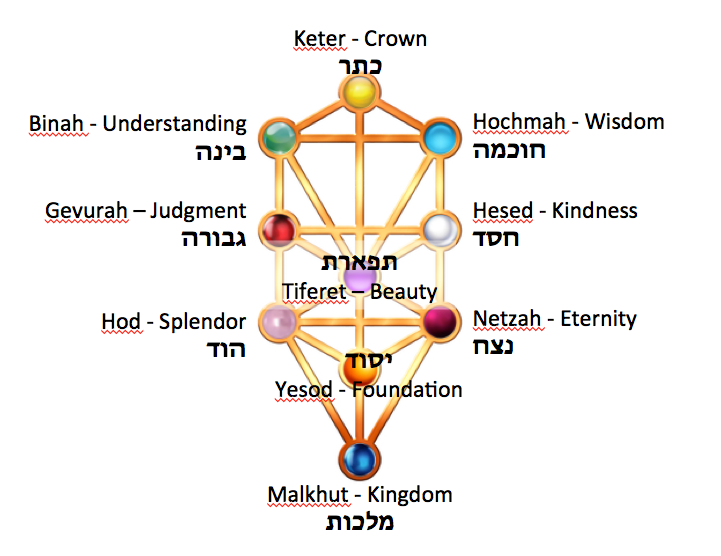
From the top, then right to left, downwards:
1. Crown (‘Keter’) – Archangel Metatron is the Angel of Life and sits at the top of the tree. Like Archangel Sandalphon, once upon a time he was a human being who ascended to the angelic realm due to his faith in God and perfectly pious behaviour during his earthly incarnation as the Hebrew prophet Enoch. He often appears on a purple-orange ray and channels God’s living energy throughout the Universe created by God, bringing balance and helping people to direct the sacred energy through their lives in order to reach spiritual enlightenment. Metatron is also associated with the sacred geometric, tetrahedronal pattern of the Merkabah and its origins to the Flower of Life, which holds the structure of the whole energy systems of the body in its shape connecting us with the fundamental forms of space and time. Activate and align the Merkabah with your Soul’s truth, to enable you to become the best version of yourself, as it encompasses the eternal flow of the Divine Trinity and the four elements of earth, air, water and fire – “as above, so below”.
2. Wisdom (‘Chokmah’) – Archangel Raziel on the indigo ray is the Angel of Mysteries and Keeper of God’s Secrets. He reveals divine mysteries to enable people to become wiser by showing them how to weave knowledge into their lives in practical and inventive ways, thereby reaching their full potential as human beings. We can call on him when we need to find answers to a mystery.
3. Understanding (‘Binah’) – Archangel Tzaphkiel is the Angel of Compassionate Understanding. He leads the angels in sending the spiritual energy of understanding to people helping them to learn more about God, sending them insights and guiding them to make decisions in their daily lives that reflect their core identity as God’s beloved children, for God’s love is unconditional and everlasting.
4. Kindness and Mercy (‘Chesed’) – Archangel Zadkiel is the Angel of Mercy. He and his angels send the energy of God’s mercy to people, inspiring them to be kind to others as God is to them (for example, do as you would like to be done to) and bringing them peace when they pray, so they may be confident that God will answer their prayers in whichever way that is best. This of course does not mean that their prayers will be answered with what people want or expect but with what they actually need and this they will come to appreciate in the fulness of time.
5. Judgment and Strength (‘Gevurah’) – Archangel Chamuel is the Angel of Peaceful Relationships, bringing tough love to strengthen and empower relationships and enable people to experience inner peace and peace with each other and God. Chamuel and his angels test people’s beliefs and motivations to determine whether they are wholly grounded and authentic and to purify them in order to help people build stronger relationships with God.
6. Beauty (‘Tiphareth’) seated at the heart of the tree, Archangels Michael on the blue ray and Raphael on the green ray work together. Michael, angelic warrior, holds steadfast his Sword of Truth as the angelic leader in spiritual battles while Archangel Raphael is the chief Angel of Healing. Together they express the divine energy of beauty, helping people to tap into a higher state of consciousness.
7. Eternity (‘Netzach’) – Archangel Haniel, the Angel of Joy, expresses God’s eternal energy by helping people to trust and rely on God, who is the omnipotent one and eternally reliable, rather than people’s fickle emotions flailing around in uncertainty. He opens the doors to insightfulness that have the potential to bring them joy no matter what.
8. Glory and Splendor (‘Hod’) – Archangels Michael and Raphael again work together to express God’s beautiful glory as they fight sin and wrongdoing to ensure that His perfect design for creation triumphs over sin, which tries to taint and corrupt and permeate that splendor. Good always triumphs over evil and Michael and Raphael are there to help people overcome wrongdoing and to carry out God’s will during their lives.
9. Foundation (‘Yesod’) – Archangel Gabriel, the Angel of Revelation, is paradoxically a mixture of the Divine Masculine energy as a Master of Communication as well a perfect embodiment of the Divine Feminine energy, being associated also with birth. He was the angel who guided the Three Wise Men to the stable where the baby Jesus was born in Bethlehem and he also appeared and brought word to the Virgin Mary that she would give birth to a son and he would be the Son of God. God put Gabriel in charge of the tree’s foundation and to announce God’s glorious will to people. He brings with him divine love, wisdom, strength and new beginnings, enabling those blessings to flow through their lives by helping people to connect to God through messages of faith and to rely on God to bring changes to their lives that will help them to evolve.
10. The Kingdom (‘Malkhuth’) – Archangel Sandalphon, the Angel of Music and Prayer and Spiritual Ascension is seated here on the turquoise ray. To me, he comes through as a gentle and refined, Divine Feminine energy associated with the astrological sign of Pisces and keeper of the turquoise gemstone. The protector of unborn children, he cares for the earth and takes people’s prayers to God, and directs the music in Heaven. His role is designed to keep the divine energy flowing freely between God in Heaven and people on earth, nurturing the roots of the tree and all areas of God’s great kingdom. Call on him when you have an important prayer you wish him to carry to God or are a musician and need creative inspiritation. He will also help you process your emotions in healthy ways, nurturing emotional maturity and helping us to see the crux of a problem for us to take personal responsibility for our actions and behaviour.
Which of the areas on the Tree of Life resonate with and inspire you the most? Which of the Archangels, if any are you able to connect or seek to connect with? What kind of teachings and guidance might benefit you right now in order to enable you to show up in the world as your authentic self and bring about transformation?
I share more of my thoughts in my Tree of Life video on my YouTube channel below.
Until the next time, blessed be!
Catherine
Choose an amount
Or enter a custom amount
Your contribution is appreciated.
Your contribution is appreciated.
Your contribution is appreciated.
DonateDonate monthlyDonate yearlyPosted in Spirituality
Tags
body, Crystals, Full Moon in Leo, Green Comet, Healing, Lightwork, meditation, Moon Magic, New Earth, Selenite, Spirituality

For the first time in 50,000 years the green comet has been visible in the sky, bringing with it New Earth energy, along with the Full Moon in Leo on Sunday 5 February 2023. The concept of new earth is based on holy scripture, in which life will be from from evil, sin (or wrongdoing, as I prefer to call it), weeping, suffering, curse, death and mourning (Book of Revelation chs. 21 and 22). Although it will be similar to our present earth, it will be liberated from the curse of sin and will become earth as God originally intended it to be and Eden, or Paradise, will be restored. In Isaiah Ch.65 v.17 we are told: “For behold, I create new heavens and a new earth, and the former things shall not be remembered or come into mind”. From a spiritual perspective, New Earth is one in which we live our lives in enlightenment and as sovereign beings, open and receptive to what the Universe might have in store for us, and one in which happiness, peace, harmony and respect for humankind, Mother Earth, and all the creatures that dwell there with us, and in which we are fully attuned to our Higher Selves and are able to attain and hold high vibrational frequencies without feeling weighted down by low energies and frequencies associated with the manifestations of evil, darkness and the Seven Deadly Sins. Therefore, though our bodies may remain within The Matrix, we are comfortably able to occupy higher states of consciousness for our bodies are merely vehicles to enable our souls to inhabit and move around in order to carry out the missions and deeds in accordance with the contract we made prior to our present incarnation.
Perhaps you may have noticed the highly intense, bright sunlight and even brighter cloudy or overcast days we have experienced over the last few days, the daylight being piercing and almost blinding in its intensity. Like the green comet, this phenomenon to me symbolizes the incoming New Earth energy, in which new universal light codes are being made accessible to lightworkers and others who are at a particular stage in their spiritual evolution; those who are open and receptive to the divine plans of the Universe, who are able to let go of ego and the need to control, of anger and resentment, are able to forgive in any circumstance, and can demonstrate unconditional love for their fellow human beings, regardless of any differences or diversities no matter what. That is, those who have done the necessary shadow work on themselves in order to reach and maintain higher vibrational frequencies.
An ancient crystal named after the Greek Moon Goddess Selene, Selenite is ideal for the vibration of new earth because it is already attuned to the greater good of all earthly beings and its moon energy works beautifully for accessing and grounding the Light Body of an individual and for making them receptive to their higher selves. Selene has silver wings and a crescent crown and travels the sky in a gleaming chariot as she turns the golden day into the silvery night, guiding and protecting those in darkness. For the Ancient Greeks, she represented the moon herself, full of tranquility, love, light and eternal blessings – just like the crystal she embodies and symbolizing The Divine Feminine energy in action.
Typically found these days in Morocco where it is carved by hand into a variety of products used in lightwork and magick, Selenite is highly renowned for the transparent and ethereal, moon-like radiance of its crystals. It has a hardness of 2 meaning that it scratches easily, even with a fingernail, so care must be taken when handling and storing it. When not in use either leave safely in its position on your altar, perhaps cushioned with an altar cloth, or contain it in a soft velvet pouch or clean tissue paper if storing it in a drawer or a wooden keepsake box, for example.
Just like Lady Moon, Selenite reflects a shaft of white light into any environment in which it is placed and is believed to contain the pure liquid Light of Spirit that exists in the otherworldly place between light and matter. It brings with it a profound sense of calm and holds a fine, high frequency and powerful energy that surpasses most stones for opening, clearing and activating the chakras. Selenite vibrates particularly to the violet Crown and lavender-hued Higher Crown 7th and 8th Chakras, making it ideal for meditation, spiritual work such as reiki and other healing and connecting to ancient wisdom and knowledge, and for connecting with the world of spirit and one’s guides as well as the angelic and galactic realms. Thus, Selenite is an excellent crystal for developing the mind and mental powers, particularly the art of telepathic communication, between like-minded people; that is, people whose energies, behaviours, beliefs and experiences resonate with one another’s. Selenite is said to have the ability to hold telepathic information within its structure that enables one individual to send a particular thought or message into the crystal which can then be attuned to and received by a second individual, and is also said to hold earth’s own recorded history within its unique linear markings.
Whilst like other crystals Selenite needs to be regularly cleansed and charged, or re-energized, for example beneath the light of the Full Moon, passed through smudge stick or incense or soaked in pure sea salted water – spring water or natural mineral water with pure un-iodized sea salt added, or sea water itself – it can also be used for charging other crystals. It may also be used by someone to scry the truth of a particular situation that has occurred in its presence.
I currently have a few selenite products in stock in my Ebay shop, so if you are interested in this beautiful crystal please take a look:-
https://www.ebay.co.uk/usr/katymadelondon2016
The Full Moon in Leo on 5 February brings with it more new earth energy as the final trail of the green comet tails off into space. This particular moon energy encourages creativity and self-expression and comes in roaring like a lion! It offers us the opportunity to say how we feel and get things off our chest and out of our system, clearing the way for us to move forward and make new progress in our lives, checking any impulsiveness with a little of that Aquarian wisdom and rationality and avoiding the temptation of making any rash decisions. Perhaps, then, this Full Moon’s energy will inspire each of us to pause and reflect with care and attention as to how we might re-energize our own minds, bodies and spirits in order to work on creating the best versions of ourselves and reach our full potential as human beings within the collective.
Choose an amount
Or enter a custom amount
Your contribution is appreciated.
Your contribution is appreciated.
Your contribution is appreciated.
DonateDonate monthlyDonate yearlyChoose an amount
Or enter a custom amount
Your contribution is appreciated.
Your contribution is appreciated.
Your contribution is appreciated.
DonateDonate monthlyDonate yearly Catherine Evans