• About

Catherine Evans

~ Creative Artist and Food & Lifestyle Blogger

Catherine Evans

Tag Archives: Baking

GERMAN APPLE CAKE

05 Wednesday Feb 2025

Posted by catherineevans63 in Food and Drink

≈ Leave a comment

Tags

Apple Cake, Baking, Cake, Dessert, desserts, Food, Recipe, recipes, Sponge Cake

Apfelkuchen Recipe
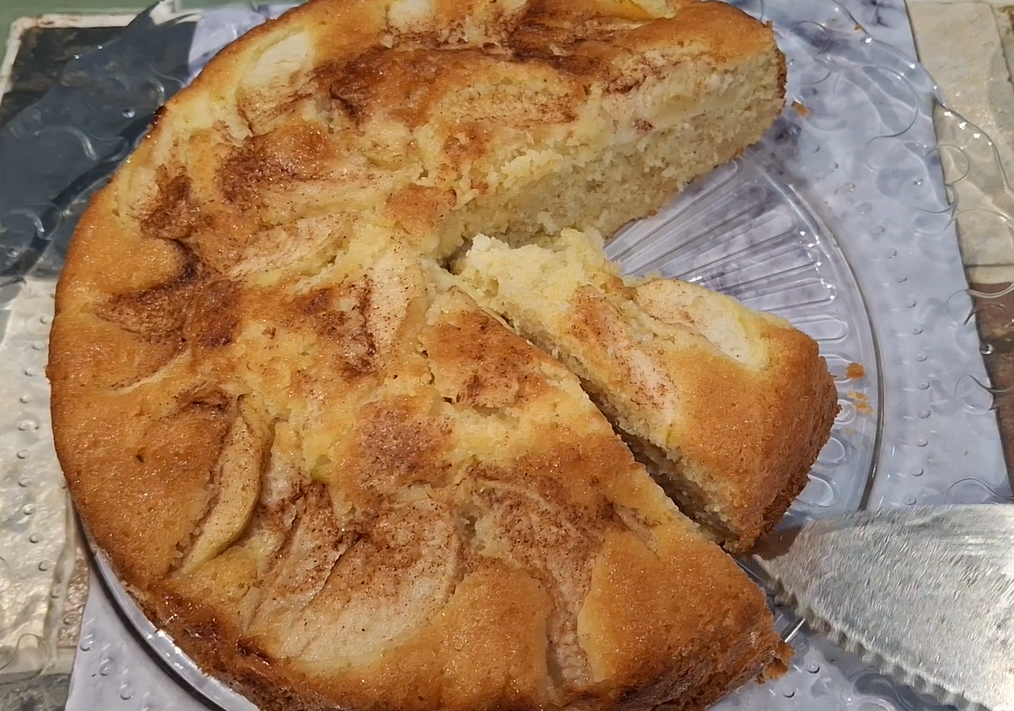
Apple cake is very popular in Germany and this is my variation on the celebrity chef Rick Stein’s classic Apfelkuchen from his “Long Weekends” series.

This yummy cake has a crunchy cinnamon sugar topping. Use any dessert apples you wish except for Bramleys as they ‘fall’ and do not keep their shape once cooked.

I have swapped out plain flour for gluten-free plain flour, golden granulated sugar for vanilla sugar and butter for Flora buttery spread.

The Apfelkuchen is nut-free, pregnancy-friendly and vegetarian making it suitable for most diets. It stays lovely and moist for a few days if kept in an airtight container – but it is so yummy it probably won’t last that long!

Ingredients

  • 2 dessert apples peeled, cored and sliced into thin wedges
  • 1 tbsp lemon juice
  • 125g (41/2 oz) Flora buttery, plus extra for greasing
  • 140g/5 oz vanilla caster sugar
  • 3 free-range eggs, at room temperature, beaten
  • 225g/8 oz plain gluten-free flour
  • 2 level tsp baking powder
  • 1/2 tsp sea salt
  • 5 tbsp full-fat milk

For the topping

  • 11/2 tbsp demerara sugar
  • 1/2 tsp ground cinnamon

Method

  1. Preheat the oven to 170C/150C fan/340F/Gas 3. Butter and line a 23cm/9″ round cake tin with greaseproof baking paper.
  2. Coat the apple wedges in the lemon juice and set aside.
  3. In a large bowl, beat together the butter and sugar, using an electric hand mixer, until pale and fluffy. Add the eggs and beat until smooth. Sift in the flour, baking powder and salt and mix well. Slowly add the milk, mixing well after each addition until you have a smooth batter.
  4. Transfer the cake batter to the cake tin. Arrange the apple slices, flat-side down, on the batter in a spiral pattern. Don’t worry if it’s not perfect.
  5. For the topping, mix together the demerara sugar and cinnamon. Sprinkle over the batter.
  6. Bake in the centre of the oven for 40-45 minutes, or until a skewer inserted in the centre of the cake comes out clean and the top is golden-brown. Leave the cake to cool in the tin for 15 minutes, then run a knife around the edges of the cake and turn it out of the tin onto a wire rack to cool completely (if wished).
  7. Serve this cake warm or at room temperature with whipped cream.

Chef’s tips

If you prefer to use butter in this recipe, make sure it is softened before combining it with the sugar.

This cake is delicious warm or cold and makes a wonderful pudding. You can also serve it with vanilla custard, creme fraiche, clotted cream or even a dollop of vanilla ice cream (my personal favourite with warm puddings), whatever floats your boat!

Here is my step-by-step video on YouTube:-

One-Time
Monthly
Yearly

Make a one-time donation

Make a monthly donation

Make a yearly donation

Choose an amount

£5.00
£15.00
£100.00
£5.00
£15.00
£100.00
£5.00
£15.00
£100.00

Or enter a custom amount

£

Your contribution is appreciated.

Your contribution is appreciated.

Your contribution is appreciated.

DonateDonate monthlyDonate yearly
MORNING ROLLS

06 Monday Jan 2025

Posted by catherineevans63 in Food and Drink

≈ Leave a comment

Tags

Baking, bread, breadrecipes, Food, Recipe, Scottishrecipes, traditional

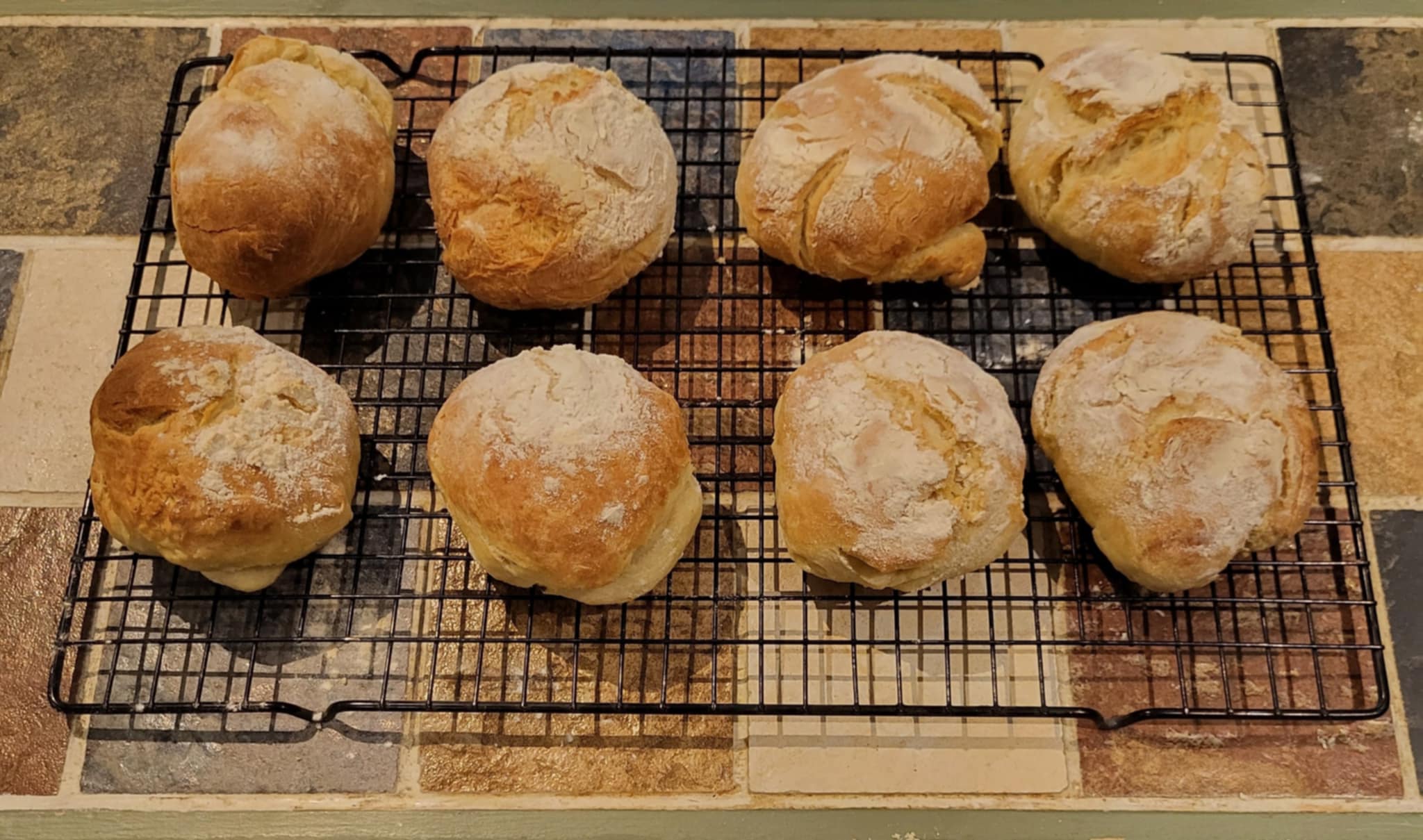
Oven-fresh Morning Rolls on a cooling rack

Some years ago now, my mother, following one of her trips to Scotland (my parents were both of Scottish heritage) gifted me a Hale Pocket Guide “Traditional Scottish Cookery” by Margaret Fairlie which cost just 60 pence – this was in 1995.

This recipe for morning rolls is taken from that pocket book, which was first published way back in 1973. I have always enjoyed cooking up Scottish cuisine as it is part and parcel of my culture and bloodline. My father’s porridge was always the best (though my mum’s was a close second) and I taught my husband how to make it the traditional Scottish way, too.

Like my mother and her mother before me, I am very fond of baking and this Morning Roll recipe is so simple, made with only a few ingredients. If you cannot find fresh yeast then substitute with 12 g dried yeast or thereabouts – round up to 2 x 7 g sachets if you wish.

Very popular, particularly in Glasgow and Fife, Morning Rolls are well-fired, airy and chewy with a crispy crust. They are sold everywhere in petrol stations, bakeries, newsagents and corner shops and are best eaten on the day they are made before they go rock hard! In Fife, a Cabin Biscuit or Roll is a local variant. Originating in Buckhaven, a town on the Firth of Forth on the east coast of Fife, sugar was added to prolong the shelf life of the roll as they were often enjoyed by crews aboard fishing boats and have distinctive prick marks on top. However, the Morning Roll or Cabin Biscuit is a bread roll and not a biscuit in either the British or American sense.

Ingredients

  • 1 lb (450 g) plain flour
  • 1 level tsp salt
  • 2 oz (50 g) lard
  • 1 oz (25 g) fresh yeast (or up to 2 x 7 g sachets dried fast action yeast)
  • 1 tsp sugar
  • 1/2 pt (300 ml) milk

Method

Sift the flour into a warm bowl with the salt and then lightly rub in the lard until fully combined.

In a separate bowl, cream the yeast and sugar until liquid (or if using yeast sachets, just mix them together). Strain (or tip) into flour mixture and make into a soft dough with the milk.

Cover with a tea towel and leave in a warm place to rise. This will take about an hour.

Knead lightly, then form into 3 inch (7.5 cm) rounds. Brush lightly with milk taking care not to let the milk run down the sides of the rolls, and dust with flour – you can do this with the help of a sieve or even a tea strainer!

Place on a greased and floured tin and leave in a warm place for 15 minutes.

Bake in a moderately hot oven (400oF/ 200oC/Gas Mark 6) for 15 to 20 minutes.

Turn rolls out on to a wire rack and allow to cool before serving.

CHEF’S TIPS:

Morning rolls are also delicious served still slightly warm with lashings of butter.

A delicious accompaniment to a bowl of homemade soup or filled with smoked Ayrshire bacon, square sausage or perhaps some good cheese and pickle.

Suitable for home freezing. As soon as the rolls have cooled, wrap individually in cling film, place in a freezer bag and transfer to the freezer. They are so tasty though they may not get that far!

Bon appetit!

Catherine

COCONUT & LEMON FAIRY CAKES

26 Friday Jul 2024

Posted by catherineevans63 in Food and Drink

≈ Leave a comment

Tags

Baking, Cake, Cupcake Recipe, Cupcakes, Dessert, Fairy Cakes, Food, Gluten-free, Recipe, recipes

Fairy cakes, little treats baked in paper cases and decorated perhaps with buttercream or glace icing and sugar flowers or sprinkles, are perfect for either a tea party or children’s party. They are really very similar to cupcakes, though a bit smaller and perfect for little fingers and a not-too-sinful indulgence for grown-ups too!

This is my go-to recipe for fairy cakes and if the kids are bored on a cold and rainy day, it is an activity they can be involved in too and which I can guarantee they will enjoy. These cakes are made with one whole free-range egg, a few tablespoons of whole milk and a few basic store-cupboard ingredients. I am using gluten-free all-purpose flour and a teaspoon of baking powder but please swap for regular all-purpose flour.

Ingredients (makes 8):-

For the cakes

  • 85 g soft butter or baking spread
  • 85 g caster sugar
  • 1 large free-range egg, beaten
  • 65 g gluten-free all purpose flour
  • 20 g coconut flour (or dessicated coconut finely whizzed in the food processor)
  • 1 tsp gluten-free baking powder
  • 1 tsp vanilla extract
  • 3-4 tbsp whole milk
  • Grated zest of one unwaxed lemon

For the glace icing

  • Icing (powdered) sugar
  • Lemon juice
  • Water
  • Sprinkles or other sugar decorations of your choice

Method

1. Preheat the oven to 180C/160C fan/350F/Gas Mark 4.

2. Place the butter or baking spread and caster sugar in a large bowl and either beat with an electric whisk or cream with a wooden spoon until light and fluffy.

3. Add a little of the beaten egg to the mixture and beat until fully combined. Sift in some of the flours and baking powder and beat, to prevent any curdling. Repeat with the remainder of the beaten egg and the flours and baking powder until everything is well-combined.

4. Carefully add 3-4 tablespoons of whole milk and stir into the cake batter slowly with a spatula until fully combined.

5. Add the grated lemon zest and the vanilla extract, carefully stirring until fully combined.

6. Place 8 standard cupcake cases in a 12-hole cupcake tin and divide the cake batter equally between them. Shake the tin to level out and place in the centre of the preheated oven for 15-18 minutes (oven temperatures vary). The cakes are ready when a skewer inserted comes out clean.

7. Remove the cakes from the oven and set the tin aside for 10 minutes or so and then remove the cakes from the tin and place on a wire rack to cool completely.

8. Meanwhile, make the glace icing. Sieve some icing sugar into a bowl with a squeeze of lemon juice and a few drops of filtered water and mix well with a tablespoon to a smooth consistency. You want it so you can trace a figure of eight in the bowl of icing when you hold the spoon above it. If the icing is too thick, add a little more liquid a few drops at a time. If the icing is too thick, add a little more sieved icing sugar.

9. Carefully spoon some icing sugar over the top of each fairy cake and decorate with sprinkles or other sugar decoration of your choice, such as sugared flowers, candied lemon zest, jelly beans or other dainty candies.

10. Place the fairy cakes on a platter and allow to the icing to set in the refrigerator for 30 minutes or so and then either transfer to the tea table or a cake tin to store if they are not being eaten immediately.

Cook’s notes:

1. If you like your cakes a little more generous, use a 6-hole cake tin and larger cupcake cases and divide the mixture between them. Allow up to 20 minutes baking time accordingly.

2. If your oven temperature tends to be hotter, try baking the cakes at 170C/150C fan/325F/Gas Mark 3 or whatever you find usually works for you.

3. These cakes can also be decorated with lemon or vanilla buttercream frosting and sugar decorations, or alternatively do them as old-fashioned butterfly cakes.

Bon appetit!

Catherine

BLOOD ORANGE & VANILLA LOAF CAKE

Featured

Posted by catherineevans63 in Food and Drink

≈ Leave a comment

Tags

Baking, Blood oranges, Cake, Food, Gluten free, Grapefruit, Iced cake, Icing, Loaf cake, Orange, Oranges, Recipe, Sponge Cake, Vanilla

Grown in Mediterranean countries, Blood oranges have a very short season during the months of late winter here in the UK. They are tarter than regular oranges with a spicy, raspberry-like flavour in addition to the citrus notes and have a distinctive dark-red flesh. You may also notice that the exterior of the rind may also show some dark colouration, depending on the variety. Blood oranges can be used in soufflés and other puddings such as steamed sponge, cakes, sauces and salad dressings, marmalade, and ice cream and sorbets.

The blood orange is a natural mutation of the regular orange which itself is a hybrid of the pomelo and the tangerine. The crimson flesh colour of the blood orange is due to the presence of anthocyanins, a family of polyphenol pigments commonly found in many fruits and flowers, but unusual in citrus fruits. The anthocyanin pigments begin gathering in the vesicles at the edges of the segments of the orange segments and at the blossom end of the fruit, and continue to build up in cold storage following harvest. The main compound found in red oranges is chrysanthemin (cyanidin 3-O-glucoside) and the flesh develops its crimson colour when the fruit matures over the low temperatures of the night. Sometimes the rind is tougher and harder to peel than regular oranges.

This yummy loaf cake showcases the versatility of blood oranges and is gluten-free. A light, airy sponge, it makes the perfect teatime sweet treat. If you are unable to source blood oranges you could substitute them with red or pink grapefruit. You could also substitute the vanilla with poppy seeds, if you prefer. You should get up to 12 slices from this cake.

Ingredients

For the cake:-

  • 50g melted butter, plus extra for greasing
  • 1 vanilla pod
  • 1 blood orange, juiced and zested
  • 1 vanilla pod, split, seeds only.
  • 200g gluten-free plain (all purpose) flour
  • 50g ground almonds
  • 2 tsp baking powder
  • 3 medium free-range eggs
  • 220g caster sugar
  • 75ml sunflower oil
  • 140g full-fat Greek-style yoghurt

For the icing:-

  • 1 blood orange, juiced and rind peeled into thin strips
  • Up to 200g icing (powdered) sugar
  • 50g caster sugar (optional)

1. Preheat oven to gas 3, 170oC, fan 150oC. Grease and line a 900g (2lb) loaf tin with greaseproof baking paper or a ready-made cake liner.

2. Zest and juice the blood orange and set the juice aside in a small bowl along with the vanilla seeds for approx. 10 minutes.

3. In a mixing bowl, mix the flour, ground almonds and baking powder together.

4. In a larger mixing bowl, beat the eggs with 220g caster sugar and the orange zest until light and fluffy. Mix in the oil, melted butter, yoghurt, and the vanilla and orange juice mixture. Fold in the dry ingredients in #3 above until combined.

5. Pour the cake batter into the prepared tin and bake for 45-55 minutes. Check it after 40 minutes and if it is browning too much, cover with foil. To check that it is ready, insert a skewer into the centre of the cake and see if it comes out clean. Remove the cake from the oven and allow to cool for 10 minutes in the tin before turning it out on to a wire rack and leave to cool completely.

6. Meanwhile, peel the rind of one blood orange into thin strips (or use a zester) and juice it thoroughly. Set the juice and zest aside separately. If you would like to make candied orange peel for decoration, heat 50g caster sugar with 50ml of the orange juice in a small saucepan over a fairly low heat until the sugar has melted. Add the orange strips and simmer for 5-10 minutes until translucent and softened. Remove from the heat and transfer to baking paper to cool.

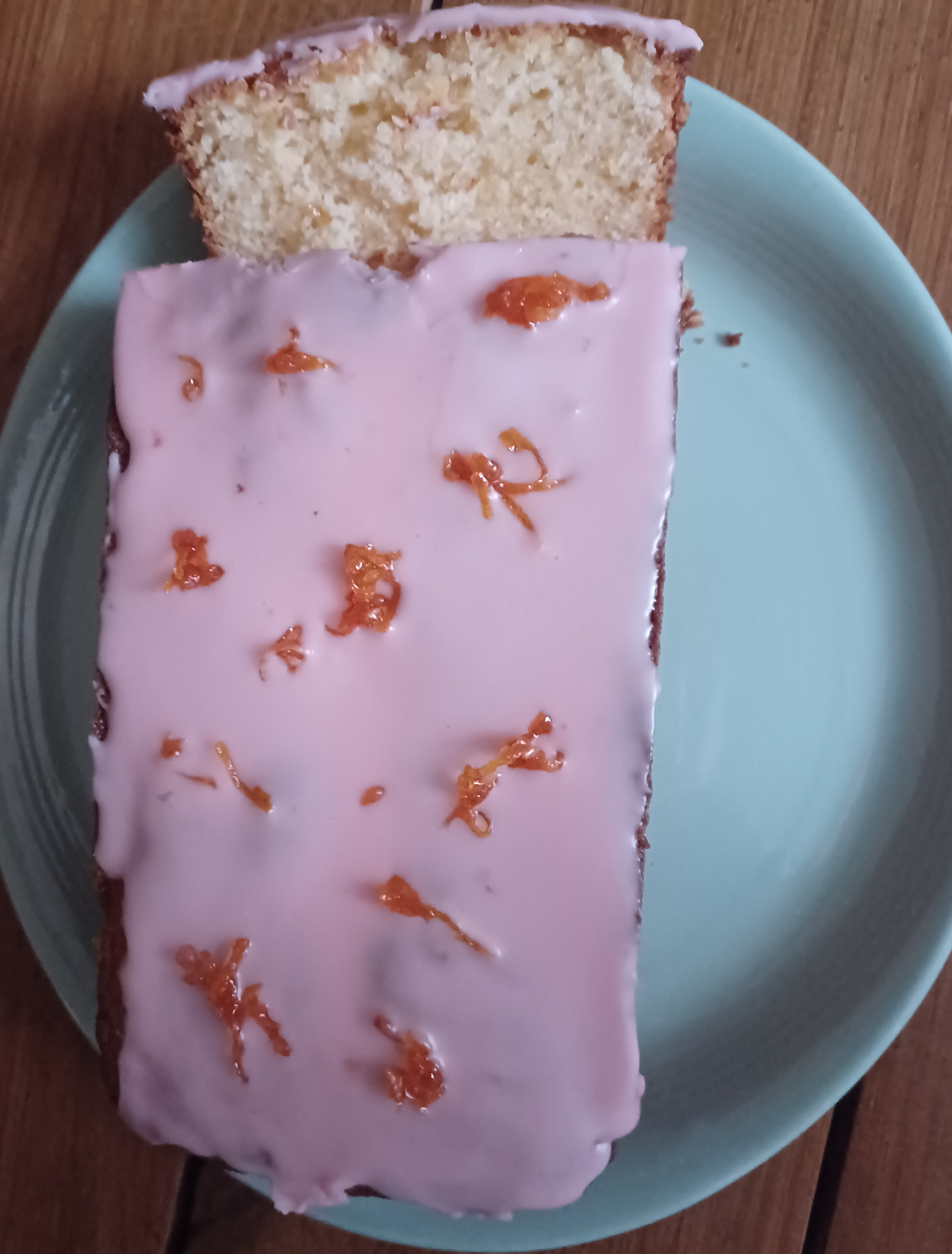
7. To make the icing, mix the icing sugar with blood orange juice, 1 teaspoon at a time to achieve the consistency of double cram. If you prefer the less sugary decoration of an icing drizzle to full coverage, you will need less icing sugar and a runnier texture more like the consistency of single cream. The icing will take on an attractive light pink colour.

8. Pour the icing over the cake and top with the orange peel or candied peel and allow the icing to set before slicing. The cake will keep covered and stored in a cool place for up to 5 days.

COOK’S NOTES

If you are unable to source blood oranges, substitute them with pink or ruby red grapefruit and follow the recipe. You will need 1 grapefruit for the cake and one for the icing and decoration.

If you prefer, substitute the vanilla seeds with one good teaspoon of vanilla extract or 2 tablespoons of poppy seeds.

You can also make this cake with regular plain (all-purpose) flour for a non-gluten-free version.

You can freeze this cake un-iced. Cover in cling film, pop it into a clear, sealable food bag and label ready for the freezer.

One-Time
Monthly
Yearly

Make a one-time donation

Make a monthly donation

Make a yearly donation

Choose an amount

¤5.00
¤15.00
¤100.00
¤5.00
¤15.00
¤100.00
¤5.00
¤15.00
¤100.00

Or enter a custom amount

¤

Your contribution is appreciated.

Your contribution is appreciated.

Your contribution is appreciated.

DonateDonate monthlyDonate yearly
Please tip me a herbal tea!Submitting form

Apple and Plum Traybake Cake

Featured

Posted by catherineevans63 in Food and Drink

≈ Leave a comment

Tags

Apple, Apple Cake, Autumn, Baking, Cake, Dessert, Fall, Food, Fruit Cake, Gluten-free, Plums, Pudding, Recipe, Spelt flour, traditional, Traybake, Traybake cake

This cake makes the most of autumn fruits and is so simple to make, and is delicious and versatile. I baked one for my birthday last month when Dan and I were renting a holiday cottage on a working farm in north-west Suffolk in the middle of nowhere. It is made with basic ingredients plus locally-grown fruit which for us was either abundant on the trees or bought cheaply from the gates of people’s houses (paid for by cash or coin into an “honesty box”) and the free-range eggs I used were only £1 per half dozen from a shelter outside our nearest public house 20 minutes’ walk down the road! You can substitute the fruit used in this recipe with any you have available, such as apricots or peaches, the zest of oranges, cherries, blueberries or blackberries.

Ingredients (makes 9 larger or 12 regular pieces)

175 g gluten-free self-raising flour, sifted

175 g soft brown sugar

175 g softened butter or sunflower margarine

1 tsp ground cinnamon

3 free-range eggs

2 local apples washed, peeled, cored and chopped

5-6 local plums washed and halved, stones removed

1. Preheat the oven to 170oC/150oC fan (340oF/ 300oF fan) or Gas Mark 4.

2. Grease a 20 cm traybake tin and line the base with greaseproof paper.

3. In a mixing bowl, cream the sugar and butter or margarine together until smooth and fluffy.

4. Add an egg and beat well into the mixture, then add some of the flour and fold in completely. Repeat this process until the flour and eggs are all combined.

5. Add the ground cinnamon and fold in.

6. Gently fold the apples into the mixture

7. Pour the mixture into the prepared tin and give it a gentle shake to even out.

8. Mark the mixture into 9 or 12 with a halved plum facing upwards. If you are allowing for 9 pieces put the remaining half plum in the centre for decoration.

9. Bake for about 35 minutes in the centre of the oven or until a skewer comes out clean. Oven temperatures vary so the cake may need a few minutes longer.

10. Remove from the oven and leave to cool in the tin for at least 10 minutes, then turn out carefully on to a wire rack to cool completely. Sprinkle with sifted icing sugar and cut into pieces and serve with a slice of mature (sharp) cheddar.

COOK’S NOTES

This recipe is also good made with spelt flour. Substitute the same quantity as for gluten-free self-raising flour and sift with 2 heaped tsp baking powder.

You may substitute the 1 tsp ground cinnamon with 1 tsp ground ginger or ground mixed spice.

If you prefer, serve the traybake cake warm as a pudding served with a dollop of creme fraiche or clotted cream. Remove the cake from the oven and cool in the tin for 15 minutes before slicing and serving.

One-Time
Monthly
Yearly

Make a one-time donation

Make a monthly donation

Make a yearly donation

Choose an amount

¤5.00
¤15.00
¤100.00
¤5.00
¤15.00
¤100.00
¤5.00
¤15.00
¤100.00

Or enter a custom amount

¤

Your contribution is appreciated.

Your contribution is appreciated.

Your contribution is appreciated.

DonateDonate monthlyDonate yearly
Donate with PayPal

Blog at WordPress.com.

Privacy & Cookies: This site uses cookies. By continuing to use this website, you agree to their use.
To find out more, including how to control cookies, see here: Cookie Policy
  • Subscribe Subscribed
    • Catherine Evans
    • Join 42 other subscribers
    • Already have a WordPress.com account? Log in now.
    • Catherine Evans
    • Subscribe Subscribed
    • Sign up
    • Log in
    • Report this content
    • View site in Reader
    • Manage subscriptions
    • Collapse this bar
 

Loading Comments...