• About

Catherine Evans

~ Creative Artist and Food & Lifestyle Blogger

Catherine Evans

Tag Archives: recipes

LITTLE PLUM CAKES

12 Sunday Apr 2026

Posted by catherineevans63 in Food and Drink

≈ Leave a comment

Tags

Baking, Dessert, Food, food history, Recipe, recipes, traditional

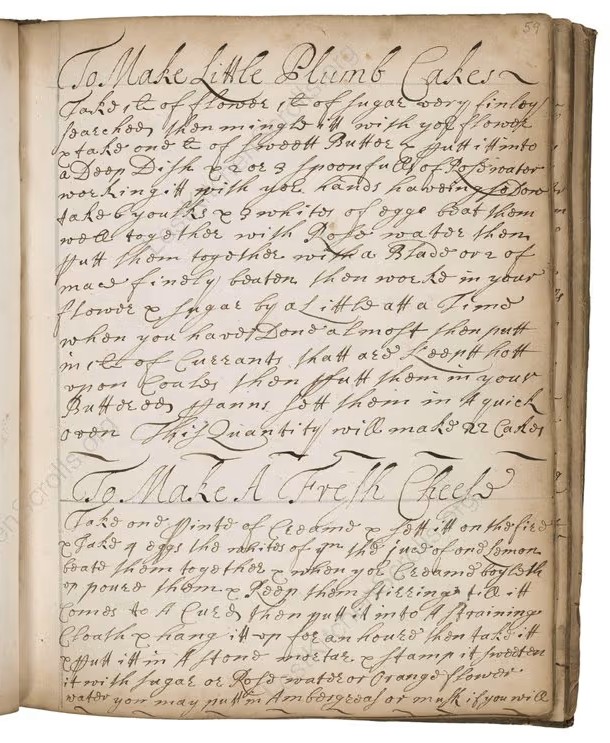
I would like to share an historical recipe with you from The Cookbook of Ann Smith, Reading for Little Plum Cakes. First published in Renaissance England in 1698, the recipe can also be found on lostkitchenscrolls.org.
https://lostkitchenscrolls.org/cookbook-of-ann-smith-reading-manuscript-bib224531-25-to-make-little-plumb-cakes

The original recipe manuscript (lostkitchenscrolls.org)

The original recipe reads: “Take ½ lb. of fine Sugar dry finley þarched, then mingle it with your flower & take ½ lb. of sweet Butter & putt it into a Deep Diſh & 2 or 3 spoonfulls of Roſe Water working it with your hands take ½ lb. of Currants & take 6 yoalks & 6 whites of egges Beat them well togather with Roſe water then putt them togather with a Blade or 2 of mace findly beaten, then work it in your Flower & sugar by a little att a Time when you have Done almost then putt in it ½ lb of Currants waſhed & dried & putt hott upon Coals, then putt them in your Butter’d pañns & sett them in a quick oven. This Quantity will make 22 Cakes.”

Like most late 17th-century recipes, the recipe is written as a narrative rather than with specific measurements or listed instructions. Ingredients are given in pounds and handfuls and any descriptions or guides are aimed at the experienced cook or housekeeper. Spelling was haphazard: ‘Finley þarched’ (for ‘finely parched’), ‘yoalks’ (yolks), ‘pañns’ (pans), and the archaic long ‘ſ’ (used in ‘Roſe Water’) pepper the text. Quantities were geared towards large households rather than a single family and with a practical order of ingredients – wet and dry ingredients blended in stages for a rich, sticky batter. The recipe was created at a time when domestic baking was starting to spread among English gentlewomen, blending tradition with the new luxuries of sugar and spice. However, ‘plum cakes’ were more like dense little sponge cakes containing either raisins and currants (‘plum’ being the general term for dried fruit) rather than the airier fruit cakes of today, but they were a signature of celebration and hospitality reflected in both the increasing availability and extravagance of imported sugar and dried fruit as well as the fashion for delicately-flavoured, perfumed pastries containing aromatics such as rosewater. Ann Smith herself was probably a woman of substance who had access to the ingredients and the staff or leisure time to produce these and other confections.

What sort of equipment might the late 17th century baker had access to? The answer is, perhaps slightly more sophisticated versions of the traditional, as well as their hands as the main tool for creaming and kneading! A large earthenware or wooden mixing bowl would be used to work the butter by hand; finely woven sieves for sifting flour and sugar; and a small whisk or fork for beating eggs. Currants were washed and dried, perhaps by an open fire and mace would be ground in a mortar and pestle. The cakes themselves would be baked in small round pans similar to modern-day tart or muffin tins, all buttered well to prevent sticking. The coals on the hearth provided ‘quick oven’, which would have been managed either in a brick oven or before a free-standing range, ash and embers carefully distributed for an even heat.

As I have mentioned, a more modern-day version of the original recipe is published on lostkitchenscrolls.org, and I referred to this when making these cakes but halved the quantities (using 115 g of butter and dry ingredients rather than 225 g) and spooned the batter in cupcake cases rather than just spooning it directly into muffin tin. However, I have further simplified the ingredients and method below for ease of use.

Metric Ingredients (makes approx. 22 or up to 12 if quantity is halved)

  • 225 g (1/2 lb) caster sugar, plus extra for dusting if liked
  • 225 g (1/2 lb) plain (all-purpose) white wheat flour
  • 225 g (1/2 lb) softened, unsalted butter
  • 2-3 tablespoons rosewater
  • 6 large eggs
  • A pinch (1/4 tsp) ground mace or nutmeg
  • 225 g (1/2 lb) dried currants, raisins or sultanas

Method

  • In a bowl, mix the sugar with the plain white wheat flour.
  • In a separate bowl, soften the unsalted butter and work it well with your hands or a wooden spoon along with 2-3 tbsp rosewater until creamy and fragrant.
  • In another bowl, beat 6 large eggs together with a splash more rosewater.
  • Add a pinch of ground mace or nutmeg (a scant 1/4 tsp)
  • Combine the egg mixture with the butter, then gradually fold in the flour and sugar mixture, step by step, until you have a loose batter.
  • Towards the end of the whole mixing process, add the dried fruit and mix through.
  • Leave the finished batter on the counter a short time to warm at room temperature, then spoon it directly into well-buttered muffin or tart tins, or alternatively line the tins with cupcake cases and spoon the batter into those.
  • Tap the filled tins gently on the surface to level everything out.
  • Bake the little cakes in a moderately hot oven (approx. 200oC/400oF/Gas Mark 6) until golden and fragrant.
  • Leave the little plum cakes in their tins to cool for a few minutes before placing them on a wire rack to cool completely.

Bon appetit!

Catherine

What do you think of this recipe? Please let me know below!

← Back

Thank you for your response. ✨

One-Time
Monthly
Yearly

Make a one-time donation

Make a monthly donation

Make a yearly donation

Choose an amount

£5.00
£15.00
£100.00
£5.00
£15.00
£100.00
£5.00
£15.00
£100.00

Or enter a custom amount

£

Your contribution is appreciated.

Your contribution is appreciated.

Your contribution is appreciated.
DonateDonate monthlyDonate yearly

THREE SISTERS STEW

05 Monday Jan 2026

Posted by catherineevans63 in Food and Drink, Lifestyle

≈ Leave a comment

Tags

culture, Food, Historical Recipe, history, New Mexico, Recipe, recipes, travel, Vegan Recipe, Vegetables

I am interested in Native American history and culture and came across a recipe online for Three Sisters Stew by Lois Ellen Frank, PhD, published on 1 November 2022 and reviewed by Dietician Emily Lachtrupp, M.S., RD. This recipe is part of their showcase: There’s a Movement to Revitalize Indigenous Cuisines and Knowledge – Here’s why that Matters:-

https://www.eatingwell.com

Three Sisters Stew is an easy recipe to prepare, and is nutritious and delicious. It is naturally diabetes-friendly, nut-free, dairy-free, soy-free, heart-healthy, vegan, vegetarian, egg-free and gluten-free!

The Three Sisters are corn, beans and squash, which for centuries have been planted together by indigenous peoples and which have spiritual significance for some. In New Mexico, the saying a healthy environment means a healthy culture is a popular one, rooted in the belief that this leads to healthy people. The way these vegetables grow together on the land reinforces this idea that all things are connected. The beans climb the cornstalks, the squash leaves give shade to the soil thereby limiting weed growth, and the beans set nitrogen into the soil and help to stabilize the cornstalks.

There are 23 unique Native American communities in New Mexico, including nineteen Pueblos, three Apache tribes (Fort Sill Apache Tribe, the Jicarilla Apache Nation and the Mescalero Apache Tribe) and the Navajo Nation. Each tribe is a Sovereign Nation with its own government, customs, tradition and culture. The 19 Pueblos comprise: Acoma, Cochiti, Isleta, Jemez, Laguna, Nambe, Ohkay Owingeh, Picuris, Pojoaque, Sandia, San Felipe, San Ildefonso, Santa Ana, Santa Clara, Santo Domingo, Taos, Tesuque, Zuni and Zia.

Although this can be served in all seasons, Three Sisters Stew is an ideal winter dish and develops further if you have enough for leftovers the next day (if you can resist seconds!), and quantities can be doubled or even trebled for many or greedy appetites! I am sharing the recipe as it is which serves 8 people, but feel free to halve quantities if feeding four or fewer people. Types of squash include zucchini, pumpkin, butternut, Crown Prince and winter squash, according to seasonality.

Ingredients

  • 1 tbsp sunflower oil (I used olive oil – I do not usually use seed oils)
  • 1 large yellow onion, chopped (you could use a large red or white onion if preferred)
  • 1 tbsp chopped garlic (3 or 4 fat cloves)
  • 1 large green bell pepper, chopped (red, orange or yellow if preferred)
  • 3 medium zucchini, diced (I used a home-grown winter squash)
  • 1 (28 oz) can no-salt-added whole peeled or diced tomatoes. (I used one 400g can tomatoes).
  • 2 (15 oz) cans no-salt-added pinto beans, rinsed.
  • 2 (15 oz) cans no-salt-added pinto beans, rinsed.
  • 11/2 cups corn kernels (I used corn cobs)
  • 4 cups water
  • 3 tbsp dried New Mexico red chili pepper or other mild chili pepper (I used a smaller amount of hot chili pepper)
  • 1 tsp kosher salt
  • 1/2 tsp dried Sonoran or Mexican oregano
  • 1/4 tsp dried thyme
  • 1/2 tsp ground pepper
  • Flat-leaf parsley and/or microgreens for garnish.

Step 1

Heat oil in a large pot over medium-high heat. Add onion and cook, stirring occasionally, until beginning to caramelize which will take 4-6 minutes. Add garlic and cook, stirring, until fragrant, for 30 seconds. Add the bell pepper and cook for 2 minutes, stirring occasionally, until slightly softened. Add the zucchini or other squash and cook, stirring occasionally, until slightly softened, for about 2 minutes. Add the tomatoes and their juice. Remember that if using whole tomatoes to break them up as you add them. Cook for a further 4 minutes, stirring occasionally, until the mixture returns to a simmer.

Step 2

Stir in the kidney beans and pinto beans, the corn and the water, and bring to a boil over a high heat. Reduce the heat to a simmer and stir in the chili powder, salt, herbs and pepper. Cook for about 20 minutes, stirring occasionally, until the liquid is a little reduced.

Step 3

Serve topped with parsley and/or microgreens, if desired.

Cook’s notes

  1. For a heartier meal why not serve with some steamed brown rice or sweet potato, or perhaps some cornbread.
  2. I added a pinch of sumac for an extra vibe.
  3. Feel free to use whatever herbs you have available. I often use fresh garden herbs in recipes.
  4. For a thicker stew, add a little coconut milk or ground almonds to taste.

Enjoy!

You can watch a step-by-step guide on my YouTube channel:-

Happy cooking!

Catherine

One-Time
Monthly
Yearly

Make a one-time donation

Make a monthly donation

Make a yearly donation

Choose an amount

£5.00
£15.00
£100.00
£5.00
£15.00
£100.00
£5.00
£15.00
£100.00

Or enter a custom amount

£

Your contribution is appreciated.

Your contribution is appreciated.

Your contribution is appreciated.

DonateDonate monthlyDonate yearly

GERMAN APPLE CAKE

05 Wednesday Feb 2025

Posted by catherineevans63 in Food and Drink

≈ Leave a comment

Tags

Apple Cake, Baking, Cake, Dessert, desserts, Food, Recipe, recipes, Sponge Cake

Apfelkuchen Recipe

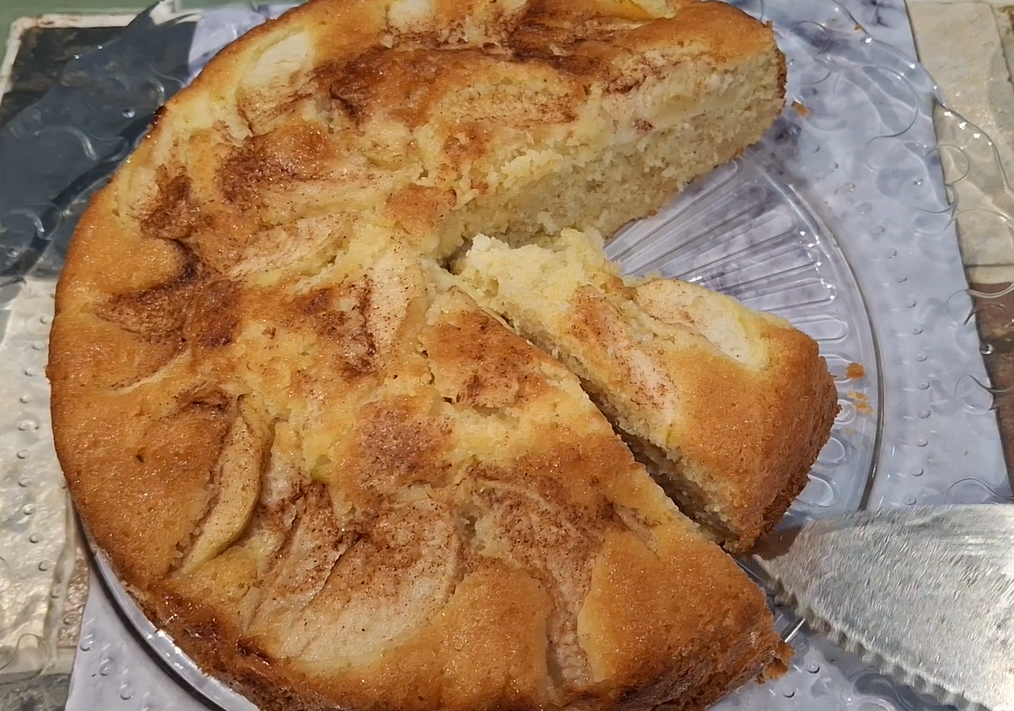
Apple cake is very popular in Germany and this is my variation on the celebrity chef Rick Stein’s classic Apfelkuchen from his “Long Weekends” series.

This yummy cake has a crunchy cinnamon sugar topping. Use any dessert apples you wish except for Bramleys as they ‘fall’ and do not keep their shape once cooked.

I have swapped out plain flour for gluten-free plain flour, golden granulated sugar for vanilla sugar and butter for Flora buttery spread.

The Apfelkuchen is nut-free, pregnancy-friendly and vegetarian making it suitable for most diets. It stays lovely and moist for a few days if kept in an airtight container – but it is so yummy it probably won’t last that long!

Ingredients

  • 2 dessert apples peeled, cored and sliced into thin wedges
  • 1 tbsp lemon juice
  • 125g (41/2 oz) Flora buttery, plus extra for greasing
  • 140g/5 oz vanilla caster sugar
  • 3 free-range eggs, at room temperature, beaten
  • 225g/8 oz plain gluten-free flour
  • 2 level tsp baking powder
  • 1/2 tsp sea salt
  • 5 tbsp full-fat milk

For the topping

  • 11/2 tbsp demerara sugar
  • 1/2 tsp ground cinnamon

Method

  1. Preheat the oven to 170C/150C fan/340F/Gas 3. Butter and line a 23cm/9″ round cake tin with greaseproof baking paper.
  2. Coat the apple wedges in the lemon juice and set aside.
  3. In a large bowl, beat together the butter and sugar, using an electric hand mixer, until pale and fluffy. Add the eggs and beat until smooth. Sift in the flour, baking powder and salt and mix well. Slowly add the milk, mixing well after each addition until you have a smooth batter.
  4. Transfer the cake batter to the cake tin. Arrange the apple slices, flat-side down, on the batter in a spiral pattern. Don’t worry if it’s not perfect.
  5. For the topping, mix together the demerara sugar and cinnamon. Sprinkle over the batter.
  6. Bake in the centre of the oven for 40-45 minutes, or until a skewer inserted in the centre of the cake comes out clean and the top is golden-brown. Leave the cake to cool in the tin for 15 minutes, then run a knife around the edges of the cake and turn it out of the tin onto a wire rack to cool completely (if wished).
  7. Serve this cake warm or at room temperature with whipped cream.

Chef’s tips

If you prefer to use butter in this recipe, make sure it is softened before combining it with the sugar.

This cake is delicious warm or cold and makes a wonderful pudding. You can also serve it with vanilla custard, creme fraiche, clotted cream or even a dollop of vanilla ice cream (my personal favourite with warm puddings), whatever floats your boat!

Here is my step-by-step video on YouTube:-

One-Time
Monthly
Yearly

Make a one-time donation

Make a monthly donation

Make a yearly donation

Choose an amount

£5.00
£15.00
£100.00
£5.00
£15.00
£100.00
£5.00
£15.00
£100.00

Or enter a custom amount

£

Your contribution is appreciated.

Your contribution is appreciated.

Your contribution is appreciated.

DonateDonate monthlyDonate yearly

COCONUT & LEMON FAIRY CAKES

26 Friday Jul 2024

Posted by catherineevans63 in Food and Drink

≈ Leave a comment

Tags

Baking, Cake, Cupcake Recipe, Cupcakes, Dessert, Fairy Cakes, Food, Gluten-free, Recipe, recipes

Fairy cakes, little treats baked in paper cases and decorated perhaps with buttercream or glace icing and sugar flowers or sprinkles, are perfect for either a tea party or children’s party. They are really very similar to cupcakes, though a bit smaller and perfect for little fingers and a not-too-sinful indulgence for grown-ups too!

This is my go-to recipe for fairy cakes and if the kids are bored on a cold and rainy day, it is an activity they can be involved in too and which I can guarantee they will enjoy. These cakes are made with one whole free-range egg, a few tablespoons of whole milk and a few basic store-cupboard ingredients. I am using gluten-free all-purpose flour and a teaspoon of baking powder but please swap for regular all-purpose flour.

Ingredients (makes 8):-

For the cakes

  • 85 g soft butter or baking spread
  • 85 g caster sugar
  • 1 large free-range egg, beaten
  • 65 g gluten-free all purpose flour
  • 20 g coconut flour (or dessicated coconut finely whizzed in the food processor)
  • 1 tsp gluten-free baking powder
  • 1 tsp vanilla extract
  • 3-4 tbsp whole milk
  • Grated zest of one unwaxed lemon

For the glace icing

  • Icing (powdered) sugar
  • Lemon juice
  • Water
  • Sprinkles or other sugar decorations of your choice

Method

1. Preheat the oven to 180C/160C fan/350F/Gas Mark 4.

2. Place the butter or baking spread and caster sugar in a large bowl and either beat with an electric whisk or cream with a wooden spoon until light and fluffy.

3. Add a little of the beaten egg to the mixture and beat until fully combined. Sift in some of the flours and baking powder and beat, to prevent any curdling. Repeat with the remainder of the beaten egg and the flours and baking powder until everything is well-combined.

4. Carefully add 3-4 tablespoons of whole milk and stir into the cake batter slowly with a spatula until fully combined.

5. Add the grated lemon zest and the vanilla extract, carefully stirring until fully combined.

6. Place 8 standard cupcake cases in a 12-hole cupcake tin and divide the cake batter equally between them. Shake the tin to level out and place in the centre of the preheated oven for 15-18 minutes (oven temperatures vary). The cakes are ready when a skewer inserted comes out clean.

7. Remove the cakes from the oven and set the tin aside for 10 minutes or so and then remove the cakes from the tin and place on a wire rack to cool completely.

8. Meanwhile, make the glace icing. Sieve some icing sugar into a bowl with a squeeze of lemon juice and a few drops of filtered water and mix well with a tablespoon to a smooth consistency. You want it so you can trace a figure of eight in the bowl of icing when you hold the spoon above it. If the icing is too thick, add a little more liquid a few drops at a time. If the icing is too thick, add a little more sieved icing sugar.

9. Carefully spoon some icing sugar over the top of each fairy cake and decorate with sprinkles or other sugar decoration of your choice, such as sugared flowers, candied lemon zest, jelly beans or other dainty candies.

10. Place the fairy cakes on a platter and allow to the icing to set in the refrigerator for 30 minutes or so and then either transfer to the tea table or a cake tin to store if they are not being eaten immediately.

Cook’s notes:

1. If you like your cakes a little more generous, use a 6-hole cake tin and larger cupcake cases and divide the mixture between them. Allow up to 20 minutes baking time accordingly.

2. If your oven temperature tends to be hotter, try baking the cakes at 170C/150C fan/325F/Gas Mark 3 or whatever you find usually works for you.

3. These cakes can also be decorated with lemon or vanilla buttercream frosting and sugar decorations, or alternatively do them as old-fashioned butterfly cakes.

Bon appetit!

Catherine

Donate with PayPal

Blog at WordPress.com.

Privacy & Cookies: This site uses cookies. By continuing to use this website, you agree to their use.
To find out more, including how to control cookies, see here: Cookie Policy
  • Subscribe Subscribed
    • Catherine Evans
    • Join 42 other subscribers
    • Already have a WordPress.com account? Log in now.
    • Catherine Evans
    • Subscribe Subscribed
    • Sign up
    • Log in
    • Report this content
    • View site in Reader
    • Manage subscriptions
    • Collapse this bar
 

Loading Comments...