• About

Catherine Evans

~ Creative Artist and Food & Lifestyle Blogger

Catherine Evans

Tag Archives: Healthy Bacteria

A Healthy Winter Salad

29 Tuesday Nov 2022

Posted by catherineevans63 in Food and Drink

≈ Leave a comment

Tags

Antioxidants, conversation, Fermenting, Food, Gut Health, Health foods, Healthy, Healthy Bacteria, Healthy Eating, Healthy Living, Homemade salad dressing, Immune system, Probiotics, Recipe, Salad, Vegetables

Salad vegetables at any time of year are a good source of insoluble fibre, which helps you to maintain a healthy digestive tract and reduce LDL, or bad, cholesterol. By adding nuts, seeds or beans (maybe even some pea shoots or alfafa sprouts) to your salads you will also get a boost of soluble fibre which helps to lower cholesterol and keep blood sugar well-balanced, which is particularly important for diabetics and more generally to control mood swings, irritability, depression and cravings for sugary things. Other symptoms of blood sugar imbalance include fatigue, difficulty concentrating, feeling hungry after only a few hours of eating, blurred vision and fat storage around the midriff. These are also symptoms of clinical hypoglycaemia which is when blood sugar falls below below 55 mg/dL. Salad vegetables contain high levels of water providing our bodies with hydration necessary for youthful skin tone and various basic bodily functions such as urination and bowel movement.

Submitting form

Salads are so easy to prepare at home and a salad a day provides multiple health benefits at any time of the year. The main difference of course is that the various salad vegetables have their seasons, which is when they will be at their most nutritious especially if they are organic or homegrown and free from chemicals and pesticides rather than flown in from hundreds or even thousands of miles away, although even these will have some nutritional value and not everyone is able to afford to buy organic or grow their own produce, Please remember to rinse all your vegetables thoroughly in clean, cold running water before preparing in order to get rid of any grit, soil and pests or residue of chemicals and pesticides.

One of the best things to include in your salad is leafy greens rich in Vitamin K such as baby spinach, Romaine lettuce or watercress in the summer and shredded kale in the winter. Low levels of Vitamin K have been linked to low bone density in women and just one cup of leafy greens per day will promote bone growth and improve the performance of the mitochondria which are the tiny cell structures that help us produce energy and effective muscle maintenance and growth. Romaine lettuce in particular contains significant levels of folate which helps to prevent stroke and cardiovascular disease. Grated or fine julienne strips of carrot, beetroot and celeriac and some finely shredded red cabbage also pep up your winter salad and help to make it super nutritious. Aim to make your salads as colourful as possible to maximise your intake of vitamins and minerals and to increase the level of powerful antioxidants in your blood. “Red” fruits and vegetables such as tomatoes, red and orange peppers, carrots, stone fruits like peaches and apricots and berries such as blueberries, pomegranates and cranberries are of particular nutritional benefit as they contain carotenoids such as Vitamin A, beta-carotene, lycopene, lutein and zeaxanthin as well as providing the body with antioxidant and anti-inflammatory attributes. Carotenoids – which are also found in the green leafy salad vegetables – also help the eyes to adjust between light and dark and to filter out high intensity light levels and thus protecting the eyes from the formation of damaging free radicals.

A fibre-rich salad will help you feel full faster so you will consume less calories than you might otherwise and including as many raw vegetables as possible will maximise their positive effects. If you can, try incorporating a handful of chopped nuts or seeds in your salad and a homemade salad dressing provide a good source of healthy oils, as does adding some sliced avocado which enables the body to absorb all the protective compounds, lutein and phytochemicals it needs for optimal health and wellbeing and a strong immune system. Nuts and seeds are also a good source of zinc and selenium, which help to prevent heart disease and develop antibodies in the immunocompromised, improve metabolism and thyroid function. Selenium also contains antioxidants that help to boost male fertility by increasing the sperm’s mobility to help it to swim and fertilise the ova. Zinc helps to keep white blood cells healthy to fight disease and infection, enable wound healing and encourage cell production in the body. A paper published in 2003 in the Folia Microbiologica noted that zinc and selenium are both important in modulating immune function and selenium in particular is necessary for the functioning of three different types of immune cells – neutrophils (they comprise 40% of white blood cells and 60% of the immune cells in the blood), macrophages (they help to eliminate foreign substances and microorganisms and other harmful organisms by overwhelming them and triggering an immune response) and ‘natural killer’ (NK) cells (lymphocites, which belong to the ‘B’ and ‘T’ cell family but respond quickly to a whole host of pathological challenges such as killing virally infected cells and detecting and controlling early signs of cancer).

One-Time
Monthly
Yearly

Make a one-time donation

Make a monthly donation

Make a yearly donation

Choose an amount

¤5.00
¤15.00
¤100.00
¤5.00
¤15.00
¤100.00
¤5.00
¤15.00
¤100.00

Or enter a custom amount

¤

Your contribution is appreciated.

Your contribution is appreciated.

Your contribution is appreciated.

DonateDonate monthlyDonate yearly

TIP: Try making your own salad dressing. To a small jar add 6 tsp extra virgin olive oil, 3 teaspoons of raw apple cider vinegar, 3 tsp honey, 3 tsp Dijon or wholegrain mustard, season with salt or pepper, screw the lid on and shake thoroughly to combine. Depending on what salad you are making you might also like to add a squeeze of fresh lemon, lime or orange juice and this kind of salad dressing also stops fruits such as chopped avocado and apple from browning. Also try adding antioxidant-rich chopped herbs to your dressings and salads such as coriander, thyme, dill, garlic, chives, rosemary and mint (which pairs particularly well with apple) to bring a further dimension to your plate.

Below is a basic winter salad using some of the fresh raw seasonal fruit and vegetables that Dan and I had bought from our local farm shop at the weekend or had delivered from Riverford Organic. I dressed the salad with my basic homemade salad dressing (as detailed in the above paragraph), adding a dollop or two of home-fermented cabbage with its health-giving probiotics and a handful each of walnuts and mixed seeds for a bit of crunch. Quantities are random – it is entirely up to you how large you want your salad to be or for how many people you are catering – but this one will feed two.

Ingredients

  • A wedge of red cabbage, thinly shredded
  • A good handful of organic curly kale, thinly shredded
  • Organic carrot, sliced into thin julienne strips
  • Large stick of celery, chopped
  • 2 small local apples, cored and chopped
  • handful of organic black grapes, halved
  • Handful of walnuts, roughly chopped
  • Handful of mixed seeds
  • Two tablespoons of fermented cabbage (optional) – my homemade one is fermented with grated carrot and cumin seeds.
  • Salad dressing

1. Wash and prepare the fruits and salad vegetables and place in a large bowl.

2. Add the roughly chopped walnuts, drizzle in the salad dressing and mix into the salad to combine thoroughly.

3. Pile the salad into the middle of one platter or two large plates.

4. Spoon the fermented cabbage (if using) on to the bed of salad and sprinkle with mixed seeds.

COOK’S TIPS:-

This salad is vegan if served on its own or with sliced avocado or some falafels.

This main course salad can also be served with shaved parmesan or vegetarian substitute, some hot smoked mackerel or salmon or even charcuterie. However you choose to present your salad, it is very versatile!

Dan had Italian charcuterie with his salad!

Buon appetito!

Catherine

Homemade Live Yoghurt

27 Sunday Nov 2022

Posted by catherineevans63 in Food and Drink

≈ Leave a comment

Tags

Bio Yoghurt, body, Breakfast, conversation, Easi-Yo, Fermenting, Food, Food Science, Fruit Yoghurt, Good Bacteria, Gut Health, Healthy Bacteria, Healthy Eating, Homemade Yoghurt, Lactic Acid, Lactose, Live Yoghurt, Natural Yoghurt, Onken, Probiotics, Recipe, Starter Recipe, Yeo Valley, Yoghurt

Live, or bio, yoghurt is a very healthy food source containing “friendly bacteria”.

Live yoghurt is fermented with live cultures, also known as probiotics, and can be beneficial to the digestive system and contribute to the balance of natural bacteria in your body, specifically the stomach and intestines when they have been aggravated by illness or medical treatment, for example. Live yoghurt may also be useful for treating irritable bowel syndrome or diarrhoea and it has always been one of my go-to’s if I’m feeling under the weather although I should point out that this happens only rarely; I often have a couple of tablespoons of live natural yoghurt at breakfast time with orange or apple or with berries if I have any and I also enjoy it with homemade fruit compote which I poach gently in a pan on the stove and then take it off the heat to cool in its own juices which enables the natural sugars to be released, although if the fruit is quite sharp I might add a tablespoon of honey as it starts to cool down.

Live yoghurts are a valuable source of lactic acid and contain species of bacteria from the Lactobacillus and Bifidobacterium families of bacteria. According to the National Yoghurt Association, pasteurised milk is converted to yoghurt during the fermentation process. Live yoghurt is usually safe for most people to eat unless their immune system is weak or compromised and if you have a good immune system it may help to strengthen it even further. If you don’t consume probiotics at the moment but are interested in doing so and are unsure whether they are right for you, perhaps discuss it with your GP or other health professional.

Whilst you can find a wide range of yoghurts and other probiotics, such as kefir, in the supermarket it is easy and fun to make your own live yoghurt at home. There are a number of ways of adding probiotics to yoghurt to make live yoghurt, some requiring more investment than others. One method might be to buy an Easi-Yo kit consisting of a large wide insulated flask and a yoghurt pot with a screw on lid and some sachets of probiotic powder. These all contain instructions and are super-easy to use although they can work out quite expensive, especially if like Dan and I you get through a lot of live yoghurt but the method is simple and fuss-free and the yoghurt is delicious every time with a lovely, creamy texture and flavour. The Easi-Yo range is stocked in the Lakeland Ltd and The Range stores and the powders are available in many flavours including natural, vanilla and even fruity ones such as strawberry.

Another way is my new favourite way which is to add a few spoons of premade live yoghurt such as Yeo Valley, Onken or Helen’s Farm (if you prefer goat milk products) to a yoghurt recipe, and this is your ‘starter’ – a principle similar to making sourdough bread, for example – and well, I felt it was necessary to research other methods of yoghurt making and perhaps save a few pennies in the cost of living crisis we are experiencing on a worldwide scale. Traditionally, the starter uses a well-balanced blend of bacteria that ‘eats’ the sugars that occur naturally in milk and then turn the milk into lactic acid, which then changes the taste and texture and will give your starter a thicker, creamier and tangier taste.

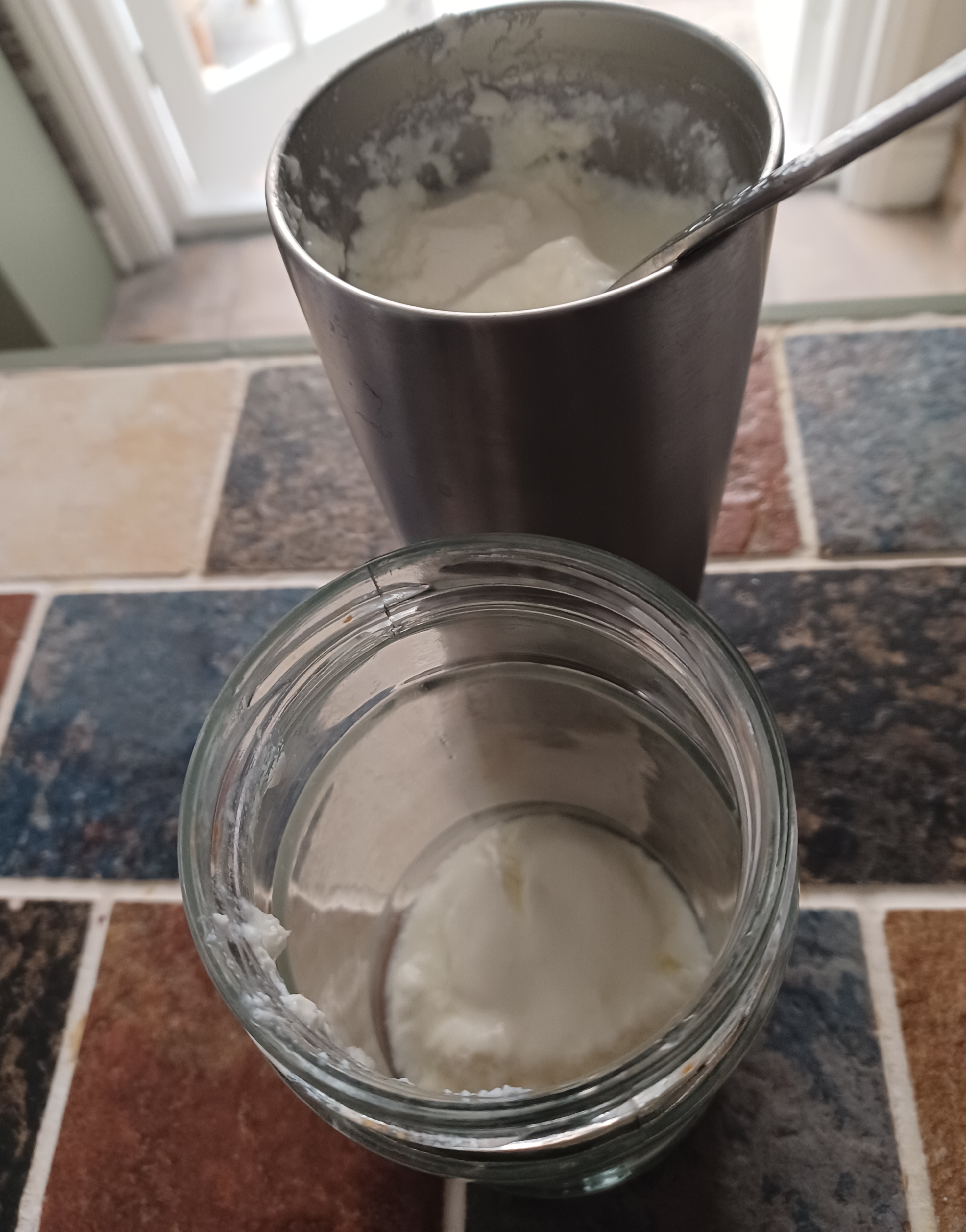
Very little equipment is needed to make your own live yoghurt. All you need are things most of us have around the kitchen: a large saucepan, a measuring cup or jug, a food thermometer, a wide-necked Thermos flask or insulated cup with a tight-fitting lid, a large sterilised jam jar, a balloon whisk (a cheap one is fine if you are short of money), a carton of full-fat or semi-skimmed cow’s milk or goat milk or UHT milk and a small pot of store-bought live yoghurt. If you like your yoghurt thicker, creamier and a bit more tangy then you might also add a little skimmed milk powder. Simply add 25 g (1 oz) of skimmed milk powder to every 500 ml of milk. If you prefer flavoured live yoghurt just buy a small pot of store-bought live yoghurt in any flavour you like to use as your starter. You will need 3 tbsp of the starter to every 500 ml of milk.

My recipe below is for 500 ml of live natural yoghurt because I only had a 500 ml capacity insulated cup that I could find right away! We had a new kitchen recently which we are still re-populating and I cannot remember where I put my Easi-Yo flask!

Ingredients

  • 500 ml fresh full-fat cow’s milk
  • 25 g skimmed milk powder
  • Small pot Yeo Valley bio yoghurt

Equipment

  • Large heavy-based saucepan
  • Food thermometer
  • Measuring jug
  • Digital scales or measuring jug/cup and measuring spoons
  • Balloon whisk

1. Remove the small pot of store-bought Live Yoghurt and leave on the counter in order to bring it to room temperature. Warm up your flask or insulated cup ready to use and according to manufacturer’s instructions (for ease of reference, you can usually fill it with hot, not boiling water, and put the lid on to stay warm and then tip out the water when you are ready to use the flask/cup).

2. Measure 500 ml milk in a jug or measuring cup and pour into the saucepan.

3. Weigh out 25 g skimmed milk powder (the cheaper ones work perfectly well – I use Tesco’s own brand) and add it to the pan of milk and whisk it in well to fully combine.

4. Clip the thermometer to the side of the saucepan so the metal probe has contact with the milk and place the pan on the stove over a low heat stirring with the balloon whisk occasionally. The liquid needs to reach 86oC on the thermometer and this may take up to 10 minutes. NOTE: if you are using UHT milk just heat it to 46oC and immediately follow step 5.

5. When the milk reaches the required temperature take it off the heat and set aside until it cools down to 46oC and quickly add 3 tablespoons of live yoghurt and whisk it in thoroughly before pouring it into the warmed flask or cup and then screw the lid on tightly.

6. Leave to stand on the counter for at least 8 hours or overnight. The longer you leave it there the thicker and creamier it will be.

7. The following morning, check to see how your yoghurt has set and then spoon it into your sterilised jam jar. If you prefer Greek Yoghurt to the set variety strain through a piece of muslin cloth over a bowl and then decant into the jam jar. Screw the lid on tightly if you have one, otherwise cover the top with cling film and an elastic band and store in the fridge. Consume within a few days.

COOK’S TIP: you can produce your next batch of Live Yoghurt with your own starter by reserving 3 tablespoons of your homemade yoghurt!

BON APPETIT!

Submitting form
Donate with PayPal

Blog at WordPress.com.

Privacy & Cookies: This site uses cookies. By continuing to use this website, you agree to their use.
To find out more, including how to control cookies, see here: Cookie Policy
  • Subscribe Subscribed
    • Catherine Evans
    • Join 42 other subscribers
    • Already have a WordPress.com account? Log in now.
    • Catherine Evans
    • Subscribe Subscribed
    • Sign up
    • Log in
    • Report this content
    • View site in Reader
    • Manage subscriptions
    • Collapse this bar
 

Loading Comments...