• About

Catherine Evans

~ Creative Artist and Food & Lifestyle Blogger

Catherine Evans

Tag Archives: Recipe

GERMAN APPLE CAKE

05 Wednesday Feb 2025

Posted by catherineevans63 in Food and Drink

≈ Leave a comment

Tags

Apple Cake, Baking, Cake, Dessert, desserts, Food, Recipe, recipes, Sponge Cake

Apfelkuchen Recipe

Apple cake is very popular in Germany and this is my variation on the celebrity chef Rick Stein’s classic Apfelkuchen from his “Long Weekends” series.

This yummy cake has a crunchy cinnamon sugar topping. Use any dessert apples you wish except for Bramleys as they ‘fall’ and do not keep their shape once cooked.

I have swapped out plain flour for gluten-free plain flour, golden granulated sugar for vanilla sugar and butter for Flora buttery spread.

The Apfelkuchen is nut-free, pregnancy-friendly and vegetarian making it suitable for most diets. It stays lovely and moist for a few days if kept in an airtight container – but it is so yummy it probably won’t last that long!

Ingredients

  • 2 dessert apples peeled, cored and sliced into thin wedges
  • 1 tbsp lemon juice
  • 125g (41/2 oz) Flora buttery, plus extra for greasing
  • 140g/5 oz vanilla caster sugar
  • 3 free-range eggs, at room temperature, beaten
  • 225g/8 oz plain gluten-free flour
  • 2 level tsp baking powder
  • 1/2 tsp sea salt
  • 5 tbsp full-fat milk

For the topping

  • 11/2 tbsp demerara sugar
  • 1/2 tsp ground cinnamon

Method

  1. Preheat the oven to 170C/150C fan/340F/Gas 3. Butter and line a 23cm/9″ round cake tin with greaseproof baking paper.
  2. Coat the apple wedges in the lemon juice and set aside.
  3. In a large bowl, beat together the butter and sugar, using an electric hand mixer, until pale and fluffy. Add the eggs and beat until smooth. Sift in the flour, baking powder and salt and mix well. Slowly add the milk, mixing well after each addition until you have a smooth batter.
  4. Transfer the cake batter to the cake tin. Arrange the apple slices, flat-side down, on the batter in a spiral pattern. Don’t worry if it’s not perfect.
  5. For the topping, mix together the demerara sugar and cinnamon. Sprinkle over the batter.
  6. Bake in the centre of the oven for 40-45 minutes, or until a skewer inserted in the centre of the cake comes out clean and the top is golden-brown. Leave the cake to cool in the tin for 15 minutes, then run a knife around the edges of the cake and turn it out of the tin onto a wire rack to cool completely (if wished).
  7. Serve this cake warm or at room temperature with whipped cream.

Chef’s tips

If you prefer to use butter in this recipe, make sure it is softened before combining it with the sugar.

This cake is delicious warm or cold and makes a wonderful pudding. You can also serve it with vanilla custard, creme fraiche, clotted cream or even a dollop of vanilla ice cream (my personal favourite with warm puddings), whatever floats your boat!

Here is my step-by-step video on YouTube:-

One-Time
Monthly
Yearly

Make a one-time donation

Make a monthly donation

Make a yearly donation

Choose an amount

£5.00
£15.00
£100.00
£5.00
£15.00
£100.00
£5.00
£15.00
£100.00

Or enter a custom amount

£

Your contribution is appreciated.

Your contribution is appreciated.

Your contribution is appreciated.

DonateDonate monthlyDonate yearly


MORNING ROLLS

06 Monday Jan 2025

Posted by catherineevans63 in Food and Drink

≈ Leave a comment

Tags

Baking, bread, breadrecipes, Food, Recipe, Scottishrecipes, traditional

Oven-fresh Morning Rolls on a cooling rack

Some years ago now, my mother, following one of her trips to Scotland (my parents were both of Scottish heritage) gifted me a Hale Pocket Guide “Traditional Scottish Cookery” by Margaret Fairlie which cost just 60 pence – this was in 1995.

This recipe for morning rolls is taken from that pocket book, which was first published way back in 1973. I have always enjoyed cooking up Scottish cuisine as it is part and parcel of my culture and bloodline. My father’s porridge was always the best (though my mum’s was a close second) and I taught my husband how to make it the traditional Scottish way, too.

Like my mother and her mother before me, I am very fond of baking and this Morning Roll recipe is so simple, made with only a few ingredients. If you cannot find fresh yeast then substitute with 12 g dried yeast or thereabouts – round up to 2 x 7 g sachets if you wish.

Very popular, particularly in Glasgow and Fife, Morning Rolls are well-fired, airy and chewy with a crispy crust. They are sold everywhere in petrol stations, bakeries, newsagents and corner shops and are best eaten on the day they are made before they go rock hard! In Fife, a Cabin Biscuit or Roll is a local variant. Originating in Buckhaven, a town on the Firth of Forth on the east coast of Fife, sugar was added to prolong the shelf life of the roll as they were often enjoyed by crews aboard fishing boats and have distinctive prick marks on top. However, the Morning Roll or Cabin Biscuit is a bread roll and not a biscuit in either the British or American sense.

Ingredients

  • 1 lb (450 g) plain flour
  • 1 level tsp salt
  • 2 oz (50 g) lard
  • 1 oz (25 g) fresh yeast (or up to 2 x 7 g sachets dried fast action yeast)
  • 1 tsp sugar
  • 1/2 pt (300 ml) milk

Method

Sift the flour into a warm bowl with the salt and then lightly rub in the lard until fully combined.

In a separate bowl, cream the yeast and sugar until liquid (or if using yeast sachets, just mix them together). Strain (or tip) into flour mixture and make into a soft dough with the milk.

Cover with a tea towel and leave in a warm place to rise. This will take about an hour.

Knead lightly, then form into 3 inch (7.5 cm) rounds. Brush lightly with milk taking care not to let the milk run down the sides of the rolls, and dust with flour – you can do this with the help of a sieve or even a tea strainer!

Place on a greased and floured tin and leave in a warm place for 15 minutes.

Bake in a moderately hot oven (400oF/ 200oC/Gas Mark 6) for 15 to 20 minutes.

Turn rolls out on to a wire rack and allow to cool before serving.

CHEF’S TIPS:

Morning rolls are also delicious served still slightly warm with lashings of butter.

A delicious accompaniment to a bowl of homemade soup or filled with smoked Ayrshire bacon, square sausage or perhaps some good cheese and pickle.

Suitable for home freezing. As soon as the rolls have cooled, wrap individually in cling film, place in a freezer bag and transfer to the freezer. They are so tasty though they may not get that far!

Bon appetit!

Catherine

BREAD ROLLS WITH POPPY SEEDS

09 Wednesday Oct 2024

Posted by catherineevans63 in Food and Drink

≈ Leave a comment

Tags

Bread recipe, Food, Homemade bread, Recipe

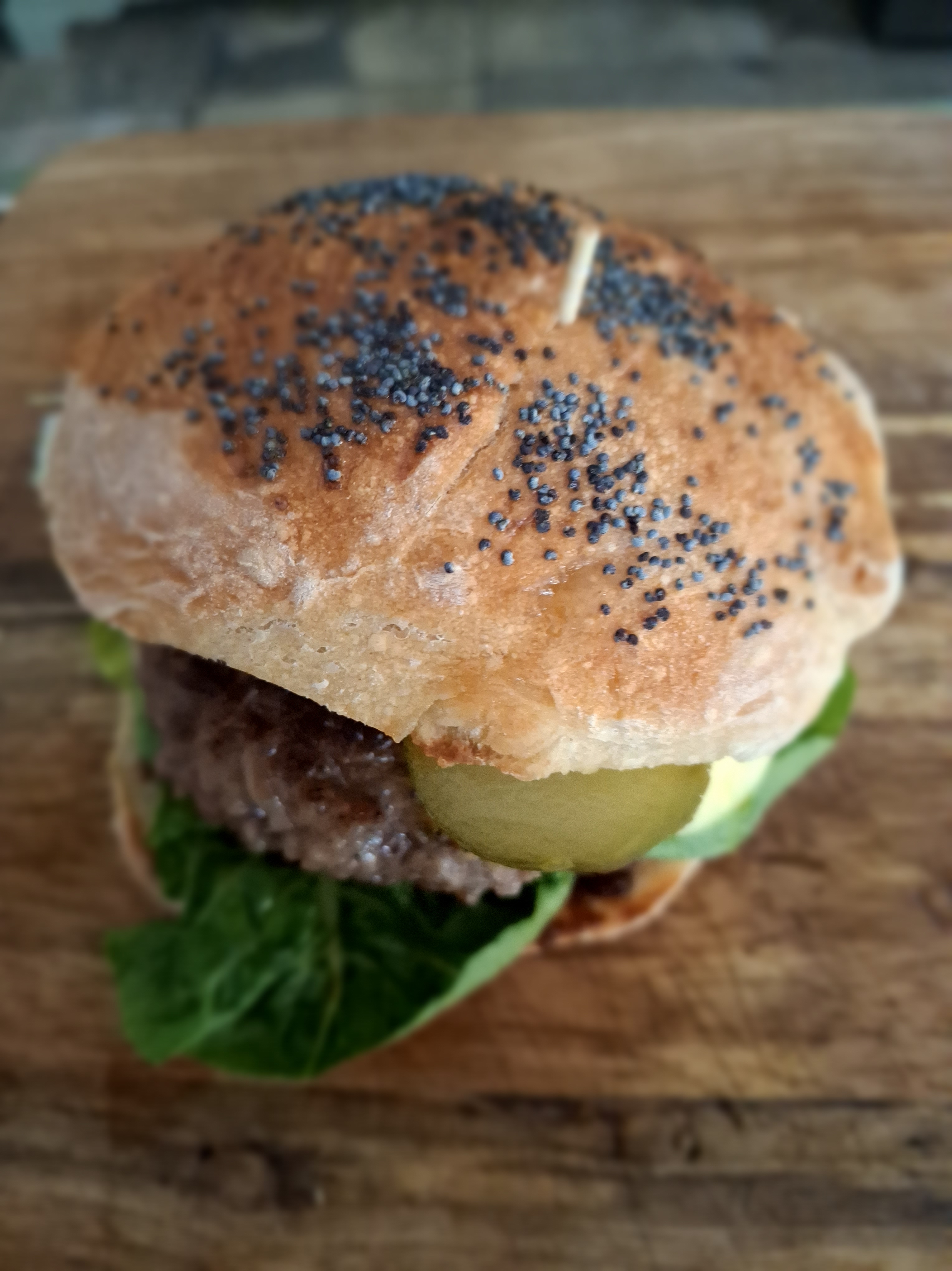
My husband Dan and I don’t eat burgers very often but when we do, I like to sandwich the patties between homemade bread rolls with all the fix-ins for us to enjoy. Dan certainly prefers my bread over shop-bought and often asks: “is it from Evans bakery?” to which I often reply: “yes” – although I am honest if the bread is shop-bought.

Below is my go-to recipe for bread rolls, enough for four people. If you have more mouths to feed, double the quantities. The recipe can be adapted to suit your own tastes, so for example you could knead in mixed seeds, chopped olives or sundried tomatoes or even herbs to the dough before its second proving.

Ingredients (makes 4)

  • 250g Strong bread flour (I like French flour)
  • 1 tsp fast action dried yeast
  • ½ tsp kosher salt
  • 165 ml Lukewarm water

Method

1. Put bread flour in a large bowl. On one side put the dried yeast and on the other the salt (the two should not come into contact with one another initially or you will kill off the yeast). Stir together well with your fingers or the blade of a dessert knife.

2. Make a well in the middle of the flour mixture and pour in about half the lukewarm water. Mix together with your fingers or the dessert knife. Gradually add more water  – you may not need all the water* until you can bring the dough together into a pliable ball. You do not want it to be sticky but if you overdo the water, just gradually mix in a little more flour.

3. Place the dough ball on a clean, floured surface and knead for 5-10 minutes until the dough is smooth. Form it into a ball and place it in a large, lightly oiled bowl and cover with a clean tea towel or plastic wrap and set aside in a warm place or with an ambient temperature for at least an hour or until the dough has doubled in size. Don’t panic if it takes longer than an hour. Just leave it to prove as long as you need to until the dough has doubled in size.

4. Sprinkle some more flour on a clean surface and ‘knock back’ the dough by kneading again. If I am using spelt flour which is lower in gluten,  I tend to only knead it gently to ensure a good second rise. At this point, weigh the dough and divide the weight into four balls. I always weigh each of these balls too, to make sure they are even in size.

5. Roll each ball between floured hands and flatten slightly. Place on a baking tray lined with baking paper, cover with a clean tea towel or oiled plastic wrap and leave for at least 20 minutes or until doubled in size. This may take up to 40 minutes to an hour.

6. Meanwhile, set your oven temperature to 230C/210C fan/450F/Gas 8. Brush the top of each roll with a little beaten egg and sprinkle with poppy seeds.

7. Bake rolls in the oven for 25-30 minutes** until golden brown and hollow-sounding when you tap on the base.

8. Leave on a wire rack to cool.

Enjoy!

COOK’S NOTES

* The ideal flour-to-water ratio for bread is 65 ml water to 100 g bread flour though ratios can vary and can be between 58 ml and 62 ml depending on the type of flour/grain you use.

For 8 rolls, double the ingredient quantities. So, for example, 500 g flour instead of 250 g, 2 tsp yeast, 1 tsp Kosher salt, 325 ml water.

If you do not want to bake the rolls immediately, you can place them in the refrigerator for up to 24 hours and then set aside to allow the dough to relax at room temperature and finish rising, before baking as normal. I find this method is also more tummy-kind.

** Remember oven temperatures vary and your bread rolls may take a little longer or shorter to bake so keep an eye on them in the last few minutes.

For floured rolls, omit the egg wash and poppy seeds and instead dust the tops with a little flour before baking. You can also vary the seed toppings with sesame seeds or multigrain seeds.

For savoury doughs, why not add some chopped olives, chopped sun-dried tomatoes, chopped rosemary or mixed seeds at Step 4?!

For a baguette or small loaf of bread knock back at Step 4 and then form into your baguette or loaf and leave to prove for 40 minutes to an hour or until doubled in size. Bake at Steps 6 and 7 for 30-35 minutes until golden brown and hollow-sounding.

For a large loaf, double quantities and bake as above for 45-55 minutes until golden brown and hollow-sounding.

One-Time
Monthly
Yearly

Make a one-time donation

Make a monthly donation

Make a yearly donation

Choose an amount

£5.00
£15.00
£100.00
£5.00
£15.00
£100.00
£5.00
£15.00
£100.00

Or enter a custom amount

£

Your contribution is appreciated.

Your contribution is appreciated.

Your contribution is appreciated.

DonateDonate monthlyDonate yearly
COCONUT & LEMON FAIRY CAKES

26 Friday Jul 2024

Posted by catherineevans63 in Food and Drink

≈ Leave a comment

Tags

Baking, Cake, Cupcake Recipe, Cupcakes, Dessert, Fairy Cakes, Food, Gluten-free, Recipe, recipes

Fairy cakes, little treats baked in paper cases and decorated perhaps with buttercream or glace icing and sugar flowers or sprinkles, are perfect for either a tea party or children’s party. They are really very similar to cupcakes, though a bit smaller and perfect for little fingers and a not-too-sinful indulgence for grown-ups too!

This is my go-to recipe for fairy cakes and if the kids are bored on a cold and rainy day, it is an activity they can be involved in too and which I can guarantee they will enjoy. These cakes are made with one whole free-range egg, a few tablespoons of whole milk and a few basic store-cupboard ingredients. I am using gluten-free all-purpose flour and a teaspoon of baking powder but please swap for regular all-purpose flour.

Ingredients (makes 8):-

For the cakes

  • 85 g soft butter or baking spread
  • 85 g caster sugar
  • 1 large free-range egg, beaten
  • 65 g gluten-free all purpose flour
  • 20 g coconut flour (or dessicated coconut finely whizzed in the food processor)
  • 1 tsp gluten-free baking powder
  • 1 tsp vanilla extract
  • 3-4 tbsp whole milk
  • Grated zest of one unwaxed lemon

For the glace icing

  • Icing (powdered) sugar
  • Lemon juice
  • Water
  • Sprinkles or other sugar decorations of your choice

Method

1. Preheat the oven to 180C/160C fan/350F/Gas Mark 4.

2. Place the butter or baking spread and caster sugar in a large bowl and either beat with an electric whisk or cream with a wooden spoon until light and fluffy.

3. Add a little of the beaten egg to the mixture and beat until fully combined. Sift in some of the flours and baking powder and beat, to prevent any curdling. Repeat with the remainder of the beaten egg and the flours and baking powder until everything is well-combined.

4. Carefully add 3-4 tablespoons of whole milk and stir into the cake batter slowly with a spatula until fully combined.

5. Add the grated lemon zest and the vanilla extract, carefully stirring until fully combined.

6. Place 8 standard cupcake cases in a 12-hole cupcake tin and divide the cake batter equally between them. Shake the tin to level out and place in the centre of the preheated oven for 15-18 minutes (oven temperatures vary). The cakes are ready when a skewer inserted comes out clean.

7. Remove the cakes from the oven and set the tin aside for 10 minutes or so and then remove the cakes from the tin and place on a wire rack to cool completely.

8. Meanwhile, make the glace icing. Sieve some icing sugar into a bowl with a squeeze of lemon juice and a few drops of filtered water and mix well with a tablespoon to a smooth consistency. You want it so you can trace a figure of eight in the bowl of icing when you hold the spoon above it. If the icing is too thick, add a little more liquid a few drops at a time. If the icing is too thick, add a little more sieved icing sugar.

9. Carefully spoon some icing sugar over the top of each fairy cake and decorate with sprinkles or other sugar decoration of your choice, such as sugared flowers, candied lemon zest, jelly beans or other dainty candies.

10. Place the fairy cakes on a platter and allow to the icing to set in the refrigerator for 30 minutes or so and then either transfer to the tea table or a cake tin to store if they are not being eaten immediately.

Cook’s notes:

1. If you like your cakes a little more generous, use a 6-hole cake tin and larger cupcake cases and divide the mixture between them. Allow up to 20 minutes baking time accordingly.

2. If your oven temperature tends to be hotter, try baking the cakes at 170C/150C fan/325F/Gas Mark 3 or whatever you find usually works for you.

3. These cakes can also be decorated with lemon or vanilla buttercream frosting and sugar decorations, or alternatively do them as old-fashioned butterfly cakes.

Bon appetit!

Catherine

The September Garden

Featured

Posted by catherineevans63 in Food and Drink, Homegrown, Lifestyle

≈ Leave a comment

Tags

Food, Fruit, Fruit and Vegetables, Gardening, Grow your own, Homegrown, Recipe, Rhubarb, Salad, Tomatoes, Vegetables

September started well with beautiful warm, sunny weather right into the second week of the month, right up until we left for a week’s holiday in south-west Scotland. In fact, the temperatures were high enough that it was like being in the South of France, albeit more humid.

The herbs were doing well being in part sun-part shade, and I treated us to a new pot of garden mint from our local garden centre and which Dan potted up into a larger, terracotta pot so it has plenty of room to grow. My late mother had several mint bushes at the end of her garden and one of my favourite culinary memories growing up is of her homemade mint sauce to accompany Sunday lunch or cheap, slow cooked cuts of lamb. These days I use fresh mint leaves in a wide variety of ways including steeped in hot water as a healthful drink, raw in salads and chopped finely in vegetarian Indian and Middle Eastern recipes; mint is delicious in falafels or mixed with yoghurt as a dressing or dip.

August’s land cress had been eaten, thus I sowed some spinach seeds in the trough of my growing table at the start of the month. The seedlings are now starting to thrive as long as we manage to keep the slugs and snails off them.

The nasturtiums were only leafing but since we returned from holiday at the weekend more new flowers have appeared and more plants have started growing in the troughs. It is now the last week of September and Dan has already enjoyed some nasturtium leaves and petals in his lunchtime salads, though growth is now slowing as we head into early autumn.

2023 has been an excellent year for salad leaves in particular and we have enjoyed a wide variety of homegrown in salads and sandwiches. As well as the spinach seeds, I also sowed some more lettuce seeds in the troughs wherever there were gaps. As long as I start to cover them with fleece for frost protection they should keep growing all winter.

The kale is also flourishing and we have had some of it chopped and lightly steamed with leftovers left to ‘fester’ for a couple of days in the refrigerator with cooked potatoes and then fried as bubble and squeak, which we enjoy with fried free range eggs for breakfast or a simple supper.

Before we went on holiday, Dan picked all the beetroot and weed potatoes and we stored them in a cool place in hessian sacks. To be honest, the beetroot didn’t last long; some we ate roasted or steamed and I sliced and pickled some of the steamed ones for later on in the year, and others I gave to my piano teacher, Jake, and our cleaner friend Val, along with kale, beetroot tops (which are a good substitute for spinach and Swiss chard in recipes), potatoes and rhubarb.

In fact, since we have returned from Scotland the rhubarb has once again expanded and we may need to cut it back yet again. Our gardener Lorraine will move the rose bush in November, and will plant the one currently in a plant pot on my great-uncle’s grave. My lovely cousin Agnes gave me a fragrant yellow rose bush for my special birthday called “Golden Memories”, and Dan is going to plant it in the new designated area. All our rose bushes are traditional, sweet-smelling ones and should make a breathtaking display next summer. Recently, we have enjoyed several vases from the rose bushes that are already well-established. We may still also ask Lorraine to split the rhubarb crowns and plant ones elsewhere, perhaps at the end of the garden near the greenhouse, or perhaps we will give away what we cannot easily accommodate.

The quinces are swelling nicely on the tree, though some of the fruits have grown rotten on the bough. However, I have picked a few lovely ones already, as well as a couple of windfalls and we should have another excellent crop this year. I usually enjoy making jars of membrillo (traditional Spanish quince paste), which goes well with cheese, nut roasts and charcuterie. Sometimes I add quince pulp just as it is to a homemade nut roast and this year I am going to try adding some to marrow chutney.

The courgettes are still thriving and most have not been devoured by garden ‘pests’; in the space of a week one of the courgettes had become an enormous vegetable marrow! I cut a small piece off the marrow last night to put in our suppertime vegetable pasta bake and Dan’s salad lunch box for today, and most of it is still sitting enormously in our ‘fridge; later in the week, most of it will become chutney.

The tomatoes have cropped incredibly well this year, with no sign of the tomato blight that spoiled last year’s crop. Before our holiday, I made a tasty tomato sauce for pasta and other dishes and we had most of that last night in the pasta bake and I am having the rest to accompany my beanburger this evening, as Dan is staying overnight at his mum’s due to his work schedule. After supper, I will be making a big batch of tomato chutney, which I prepared earlier this afternoon and takes about an hour to cook on the stove.

Needless to say, we are looking forward to more tasty pickings as the month draws to a close and it will be interesting to see what October brings.

Catherine (26 Sep 2023)

Creamy Spiced ‘Marigold’ Soup

Featured

Posted by catherineevans63 in Food and Drink

≈ Leave a comment

Tags

Food, Ginger, Recipe, Soup, spices, Vegan, Vegetable Soup, Vegetables, Vegetarian

A bowlful of goodness

My Creamy Spiced ‘Marigold’ Soup isn’t made with any flowers at all but its attractive orange hue reminds me of the pretty African Marigolds growing in our front garden as a young girl growing up in Zambia. We lived there while my father carried out his two-year contract at the University of Lusaka and my mother was Secretary to the Bursar there. We returned to the UK in June 1971 when political and social unrest was beginning to make life increasingly difficult for the expatriate community.

This soup recipe is easy and packs a punch, taking around 15-20 minutes to prepare depending on how large or small you chop your root vegetables and using hot stock will also help things along. I have used carrots, turnip and sweet potato but you could substitute the sweet potato with squash or pumpkin, for example, as they belong to the same family of vegetables. If you avoid spicy food or are making it for people who have plainer tastes or who are unwell, you can still make this soup but omit the spices. For extra creaminess try adding a splash of coconut milk instead of cream and keep it vegan!

Ingredients (serves 4)

  • 1 tbsp coconut or other oil
  • 1 medium sweet potato, peeled and cubed
  • 2 large carrots, peeled and chopped
  • 1 small white turnip, peeled and chopped
  • 1 celery stick, diced
  • 1 white onion, diced
  • 1 garlic clove, chopped finely
  • 1 tsp curry powder (optional)
  • 1 tsp cumin (optional)
  • 1 tsp turmeric (optional)
  • 2 cm piece root ginger, chopped
  • a good pinch of chilli flakes (optional)
  • 1 litre vegetable stock, or vegetable water (eg left over from steamed vegetables)
  • 1 bay leaf
  • Sea salt and pepper
  • Splash of single cream or coconut milk (optional)

Method

  1. Scoop one tablespoon of coconut oil into a large heavy-bottomed saucepan over a medium heat and when it has melted, turn the heat right down and add the diced onion and celery adding a little sea salt and sweat them down for a few minutes. Be careful not to let them brown, they only need to be softened. Add the chopped garlic and stir through to combine.
  2. Add the curry powder, chilli flakes and other spices (if using) and stir quickly through the softened onion, garlic and celery, then add the other vegetables, stirring everything together to thoroughly combine.
  3. Turn up the heat a little and pour in the hot vegetable stock or vegetable water and the bay leaf and bring to the boil, then simmer until all the vegetables are cooked through, adjusting the heat if necessary.
  4. Remove the saucepan from the heat and allow to cool slightly, remove the bay leaf and then whizz with a stick blender until smooth.
  5. Return to a low heat, add a good splash of cream or coconut milk to your liking and check and adjust the seasoning with a sprinkle of salt and freshly ground pepper if necessary.
  6. Ladle the soup into bowls and garnish with a sprinkling of fresh chopped parsley or coriander and perhaps a small swirl of coconut milk or cream and serve with crusty bread.

Bon appetit!

COOK’S NOTES

  • Omit the garlic if you do not like it
  • You can make this soup with pre-cooked root vegetables or leftovers, which will speed up the cooking time.
  • If you love coriander, add a teaspoon of ground coriander seeds at stage 2.
  • If you do not have any root ginger, a teaspoon of ginger powder or dried galangal will work just as well.
  • If you do not like spicy soup, make it without some or all of the spices but try adding 1 tbsp tomato puree or tomato ketchup
  • If the soup is too thick, add a little water at stage 5.
  • For the stock, if you are not using homemade stock then it may be made with water and a stock cube or 1 teaspoon of vegan Vegetable Bouillon. Use no more than 1 tsp Buillon to 1 litre of water as it is very salty.

EASY CHICKEN SOUP

14 Tuesday Mar 2023

Posted by catherineevans63 in Food and Drink

≈ 2 Comments

Tags

Chicken recipes, conversation, Food, Recipe

I think it is fair to say that one of the things my husband Dan most enjoys eating is a big bowlful of my homemade chicken soup – “Jewish Penicillin”, as I often call it – especially during the colder months or if he’s feeling under the weather. Dan suffers from sinusitis so I often pep the soup up with warm spices and/or a hint of chilli, especially when his sinuses are blocked. He likes to take a flask of this soup with him to work, along with a protein-packed salad.

Chicken soup is made from chicken – traditionally a boiling fowl – simmered in water or stock with other ingredients such as vegetables and noodles, rice or barley, and perhaps some dumplings, and can take as long as two or three hours to prepare from scratch if you’re going for a crystal clear consomme. Chicken soup is extremely versatile and can be made with chicken wings or the carcass leftover from a roast chicken. It may be blended smoothly with a little cream or milk as a Cream of Chicken Soup; a thick broth with diced vegetables and barley or lentils; cooked with leeks and potatoes as the traditional Scottish favourite, Cock-a-Leekie soup; a warmly spiced Moroccan chicken soup rich with tomatoes, chickpeas, coriander and a little finely-sliced preserved lemon; in fact, there is a whole raft of chicken soup recipes from all over the world so the choice is yours. Be as adventurous as you dare!

The quick recipe I am sharing with you I have adapted from a Women’s Institute recipe from the post-war era. The WI recipe blends a little butter, plain (all purpose) flour, 600 ml water to which a stock cube has been added, together with 300 ml milk (if liked), an egg yolk and salt and pepper. My method is a little different as I prefer to use cornstarch, never add the egg yolk and whenever I make the soup I just go with the flow, so it usually has different flavours each time I make it. I often prepare the soup with poaching or steaming liquid from chicken or vegetables but if I do not have enough of it then I top it up with water and perhaps crumble in half a stock cube. The real beauty about this soup is that it takes only 15-20 minutes to prepare from start to finish.

This recipe can be easily modified for vegetarians and vegans. Simply swap the chicken stock with vegetable stock and use sunflower spread instead of butter – or neither (see recipe alternative below) – and in fact I often make a quick vegetable soup this way using water with either a Kallo yeast-free low-salt vegetable stock cube or a heaped teaspoon of Swiss Bouillon stock powde. Finish with a dash of plant-based ‘cream’ or a little coconut milk if you wish. If you need to feed a larger number of people, simply double the quantities and it will turn out fine. This basic soup recipe will provide 2 generous servings without the milk or 4 with it.

INGREDIENTS (serves 2 or 4)

  • 25 g (1 oz) butter or sunflower spread, if liked
  • 25 g (1 oz) plain (all-purpose) flour or cornflour (cornstarch)
  • 600 ml (1 pint) chicken stock
  • 300 ml (1/2 pint) milk or coconut milk, if liked
  • one bay leaf
  • finely chopped herbs of your choice – e.g. parsley, thyme, tarragon, rosemary, coriander
  • diced cooked chicken or vegetables of your choice (optional)

1. If you are using butter or sunflower spread, melt it in a saucepan and stir in the flour. Cook, stirring, for 2 minutes until the flour has ‘cooked out’. Gradually stir in the stock and milk or coconut milk if using, and the bay leaf, bringing it to the boil and then simmer, still stirring, until thickened.

2. If you do not wish to use butter or sunflower spread, in a large jug mix 25 g cornflour with a little of the stock until smooth, add the rest of the liquid and bay leaf, stirring well and pour into a large saucepan over a medium heat, stirring until smooth and thickened.

3. When the soup has thickened, take off the heat and cool slightly and strain through a fine sieve, returning it to the cleaned pan along with the chopped herbs and the chicken or vegetable dice, if using, and cook very gently over a low heat, stirring, until it is piping hot.

4. Serve immediately in bowls with herbs, crispy bacon or croutons to garnish and some good bread.

COOK’S NOTES

For a vegan or vegetarian version substitute the chicken stock with vegetable stock and use coconut milk or plant’-based cream, if you wish, for a richer and creamier finish.

If you do not wish to add milk or coconut to the soup recipe, why not serve a dash of coconut milk or cream for a luxurious finish, upon serving.

If you do wish to add an egg yolk, do so at Step 3 once the soup has been strained and returned to the pan. Add the seasoning, herbs and diced chicken or vegetables if you wish and cook very gently, stirring, until the soup thickens.

Bon appetit!

Catherine

One-Time
Monthly
Yearly

Make a one-time donation

Make a monthly donation

Make a yearly donation

Choose an amount

¤5.00
¤15.00
¤100.00
¤5.00
¤15.00
¤100.00
¤5.00
¤15.00
¤100.00

Or enter a custom amount

¤

Please tip me a peppermint tea! Your contribution is appreciated.

Your contribution is appreciated.

Your contribution is appreciated.

DonateDonate monthlyDonate yearly

BLOOD ORANGE & VANILLA LOAF CAKE

Featured

Posted by catherineevans63 in Food and Drink

≈ Leave a comment

Tags

Baking, Blood oranges, Cake, Food, Gluten free, Grapefruit, Iced cake, Icing, Loaf cake, Orange, Oranges, Recipe, Sponge Cake, Vanilla

Grown in Mediterranean countries, Blood oranges have a very short season during the months of late winter here in the UK. They are tarter than regular oranges with a spicy, raspberry-like flavour in addition to the citrus notes and have a distinctive dark-red flesh. You may also notice that the exterior of the rind may also show some dark colouration, depending on the variety. Blood oranges can be used in soufflés and other puddings such as steamed sponge, cakes, sauces and salad dressings, marmalade, and ice cream and sorbets.

The blood orange is a natural mutation of the regular orange which itself is a hybrid of the pomelo and the tangerine. The crimson flesh colour of the blood orange is due to the presence of anthocyanins, a family of polyphenol pigments commonly found in many fruits and flowers, but unusual in citrus fruits. The anthocyanin pigments begin gathering in the vesicles at the edges of the segments of the orange segments and at the blossom end of the fruit, and continue to build up in cold storage following harvest. The main compound found in red oranges is chrysanthemin (cyanidin 3-O-glucoside) and the flesh develops its crimson colour when the fruit matures over the low temperatures of the night. Sometimes the rind is tougher and harder to peel than regular oranges.

This yummy loaf cake showcases the versatility of blood oranges and is gluten-free. A light, airy sponge, it makes the perfect teatime sweet treat. If you are unable to source blood oranges you could substitute them with red or pink grapefruit. You could also substitute the vanilla with poppy seeds, if you prefer. You should get up to 12 slices from this cake.

Ingredients

For the cake:-

  • 50g melted butter, plus extra for greasing
  • 1 vanilla pod
  • 1 blood orange, juiced and zested
  • 1 vanilla pod, split, seeds only.
  • 200g gluten-free plain (all purpose) flour
  • 50g ground almonds
  • 2 tsp baking powder
  • 3 medium free-range eggs
  • 220g caster sugar
  • 75ml sunflower oil
  • 140g full-fat Greek-style yoghurt

For the icing:-

  • 1 blood orange, juiced and rind peeled into thin strips
  • Up to 200g icing (powdered) sugar
  • 50g caster sugar (optional)

1. Preheat oven to gas 3, 170oC, fan 150oC. Grease and line a 900g (2lb) loaf tin with greaseproof baking paper or a ready-made cake liner.

2. Zest and juice the blood orange and set the juice aside in a small bowl along with the vanilla seeds for approx. 10 minutes.

3. In a mixing bowl, mix the flour, ground almonds and baking powder together.

4. In a larger mixing bowl, beat the eggs with 220g caster sugar and the orange zest until light and fluffy. Mix in the oil, melted butter, yoghurt, and the vanilla and orange juice mixture. Fold in the dry ingredients in #3 above until combined.

5. Pour the cake batter into the prepared tin and bake for 45-55 minutes. Check it after 40 minutes and if it is browning too much, cover with foil. To check that it is ready, insert a skewer into the centre of the cake and see if it comes out clean. Remove the cake from the oven and allow to cool for 10 minutes in the tin before turning it out on to a wire rack and leave to cool completely.

6. Meanwhile, peel the rind of one blood orange into thin strips (or use a zester) and juice it thoroughly. Set the juice and zest aside separately. If you would like to make candied orange peel for decoration, heat 50g caster sugar with 50ml of the orange juice in a small saucepan over a fairly low heat until the sugar has melted. Add the orange strips and simmer for 5-10 minutes until translucent and softened. Remove from the heat and transfer to baking paper to cool.

7. To make the icing, mix the icing sugar with blood orange juice, 1 teaspoon at a time to achieve the consistency of double cram. If you prefer the less sugary decoration of an icing drizzle to full coverage, you will need less icing sugar and a runnier texture more like the consistency of single cream. The icing will take on an attractive light pink colour.

8. Pour the icing over the cake and top with the orange peel or candied peel and allow the icing to set before slicing. The cake will keep covered and stored in a cool place for up to 5 days.

COOK’S NOTES

If you are unable to source blood oranges, substitute them with pink or ruby red grapefruit and follow the recipe. You will need 1 grapefruit for the cake and one for the icing and decoration.

If you prefer, substitute the vanilla seeds with one good teaspoon of vanilla extract or 2 tablespoons of poppy seeds.

You can also make this cake with regular plain (all-purpose) flour for a non-gluten-free version.

You can freeze this cake un-iced. Cover in cling film, pop it into a clear, sealable food bag and label ready for the freezer.

One-Time
Monthly
Yearly

Make a one-time donation

Make a monthly donation

Make a yearly donation

Choose an amount

¤5.00
¤15.00
¤100.00
¤5.00
¤15.00
¤100.00
¤5.00
¤15.00
¤100.00

Or enter a custom amount

¤

Your contribution is appreciated.

Your contribution is appreciated.

Your contribution is appreciated.

DonateDonate monthlyDonate yearly

Please tip me a herbal tea!Submitting form

A Healthy Winter Salad

29 Tuesday Nov 2022

Posted by catherineevans63 in Food and Drink

≈ Leave a comment

Tags

Antioxidants, conversation, Fermenting, Food, Gut Health, Health foods, Healthy, Healthy Bacteria, Healthy Eating, Healthy Living, Homemade salad dressing, Immune system, Probiotics, Recipe, Salad, Vegetables

Salad vegetables at any time of year are a good source of insoluble fibre, which helps you to maintain a healthy digestive tract and reduce LDL, or bad, cholesterol. By adding nuts, seeds or beans (maybe even some pea shoots or alfafa sprouts) to your salads you will also get a boost of soluble fibre which helps to lower cholesterol and keep blood sugar well-balanced, which is particularly important for diabetics and more generally to control mood swings, irritability, depression and cravings for sugary things. Other symptoms of blood sugar imbalance include fatigue, difficulty concentrating, feeling hungry after only a few hours of eating, blurred vision and fat storage around the midriff. These are also symptoms of clinical hypoglycaemia which is when blood sugar falls below below 55 mg/dL. Salad vegetables contain high levels of water providing our bodies with hydration necessary for youthful skin tone and various basic bodily functions such as urination and bowel movement.

Submitting form

Salads are so easy to prepare at home and a salad a day provides multiple health benefits at any time of the year. The main difference of course is that the various salad vegetables have their seasons, which is when they will be at their most nutritious especially if they are organic or homegrown and free from chemicals and pesticides rather than flown in from hundreds or even thousands of miles away, although even these will have some nutritional value and not everyone is able to afford to buy organic or grow their own produce, Please remember to rinse all your vegetables thoroughly in clean, cold running water before preparing in order to get rid of any grit, soil and pests or residue of chemicals and pesticides.

One of the best things to include in your salad is leafy greens rich in Vitamin K such as baby spinach, Romaine lettuce or watercress in the summer and shredded kale in the winter. Low levels of Vitamin K have been linked to low bone density in women and just one cup of leafy greens per day will promote bone growth and improve the performance of the mitochondria which are the tiny cell structures that help us produce energy and effective muscle maintenance and growth. Romaine lettuce in particular contains significant levels of folate which helps to prevent stroke and cardiovascular disease. Grated or fine julienne strips of carrot, beetroot and celeriac and some finely shredded red cabbage also pep up your winter salad and help to make it super nutritious. Aim to make your salads as colourful as possible to maximise your intake of vitamins and minerals and to increase the level of powerful antioxidants in your blood. “Red” fruits and vegetables such as tomatoes, red and orange peppers, carrots, stone fruits like peaches and apricots and berries such as blueberries, pomegranates and cranberries are of particular nutritional benefit as they contain carotenoids such as Vitamin A, beta-carotene, lycopene, lutein and zeaxanthin as well as providing the body with antioxidant and anti-inflammatory attributes. Carotenoids – which are also found in the green leafy salad vegetables – also help the eyes to adjust between light and dark and to filter out high intensity light levels and thus protecting the eyes from the formation of damaging free radicals.

A fibre-rich salad will help you feel full faster so you will consume less calories than you might otherwise and including as many raw vegetables as possible will maximise their positive effects. If you can, try incorporating a handful of chopped nuts or seeds in your salad and a homemade salad dressing provide a good source of healthy oils, as does adding some sliced avocado which enables the body to absorb all the protective compounds, lutein and phytochemicals it needs for optimal health and wellbeing and a strong immune system. Nuts and seeds are also a good source of zinc and selenium, which help to prevent heart disease and develop antibodies in the immunocompromised, improve metabolism and thyroid function. Selenium also contains antioxidants that help to boost male fertility by increasing the sperm’s mobility to help it to swim and fertilise the ova. Zinc helps to keep white blood cells healthy to fight disease and infection, enable wound healing and encourage cell production in the body. A paper published in 2003 in the Folia Microbiologica noted that zinc and selenium are both important in modulating immune function and selenium in particular is necessary for the functioning of three different types of immune cells – neutrophils (they comprise 40% of white blood cells and 60% of the immune cells in the blood), macrophages (they help to eliminate foreign substances and microorganisms and other harmful organisms by overwhelming them and triggering an immune response) and ‘natural killer’ (NK) cells (lymphocites, which belong to the ‘B’ and ‘T’ cell family but respond quickly to a whole host of pathological challenges such as killing virally infected cells and detecting and controlling early signs of cancer).

One-Time
Monthly
Yearly

Make a one-time donation

Make a monthly donation

Make a yearly donation

Choose an amount

¤5.00
¤15.00
¤100.00
¤5.00
¤15.00
¤100.00
¤5.00
¤15.00
¤100.00

Or enter a custom amount

¤

Your contribution is appreciated.

Your contribution is appreciated.

Your contribution is appreciated.

DonateDonate monthlyDonate yearly

TIP: Try making your own salad dressing. To a small jar add 6 tsp extra virgin olive oil, 3 teaspoons of raw apple cider vinegar, 3 tsp honey, 3 tsp Dijon or wholegrain mustard, season with salt or pepper, screw the lid on and shake thoroughly to combine. Depending on what salad you are making you might also like to add a squeeze of fresh lemon, lime or orange juice and this kind of salad dressing also stops fruits such as chopped avocado and apple from browning. Also try adding antioxidant-rich chopped herbs to your dressings and salads such as coriander, thyme, dill, garlic, chives, rosemary and mint (which pairs particularly well with apple) to bring a further dimension to your plate.

Below is a basic winter salad using some of the fresh raw seasonal fruit and vegetables that Dan and I had bought from our local farm shop at the weekend or had delivered from Riverford Organic. I dressed the salad with my basic homemade salad dressing (as detailed in the above paragraph), adding a dollop or two of home-fermented cabbage with its health-giving probiotics and a handful each of walnuts and mixed seeds for a bit of crunch. Quantities are random – it is entirely up to you how large you want your salad to be or for how many people you are catering – but this one will feed two.

Ingredients

  • A wedge of red cabbage, thinly shredded
  • A good handful of organic curly kale, thinly shredded
  • Organic carrot, sliced into thin julienne strips
  • Large stick of celery, chopped
  • 2 small local apples, cored and chopped
  • handful of organic black grapes, halved
  • Handful of walnuts, roughly chopped
  • Handful of mixed seeds
  • Two tablespoons of fermented cabbage (optional) – my homemade one is fermented with grated carrot and cumin seeds.
  • Salad dressing

1. Wash and prepare the fruits and salad vegetables and place in a large bowl.

2. Add the roughly chopped walnuts, drizzle in the salad dressing and mix into the salad to combine thoroughly.

3. Pile the salad into the middle of one platter or two large plates.

4. Spoon the fermented cabbage (if using) on to the bed of salad and sprinkle with mixed seeds.

COOK’S TIPS:-

This salad is vegan if served on its own or with sliced avocado or some falafels.

This main course salad can also be served with shaved parmesan or vegetarian substitute, some hot smoked mackerel or salmon or even charcuterie. However you choose to present your salad, it is very versatile!

Dan had Italian charcuterie with his salad!

Buon appetito!

Catherine

Homemade Live Yoghurt

27 Sunday Nov 2022

Posted by catherineevans63 in Food and Drink

≈ Leave a comment

Tags

Bio Yoghurt, body, Breakfast, conversation, Easi-Yo, Fermenting, Food, Food Science, Fruit Yoghurt, Good Bacteria, Gut Health, Healthy Bacteria, Healthy Eating, Homemade Yoghurt, Lactic Acid, Lactose, Live Yoghurt, Natural Yoghurt, Onken, Probiotics, Recipe, Starter Recipe, Yeo Valley, Yoghurt

Live, or bio, yoghurt is a very healthy food source containing “friendly bacteria”.

Live yoghurt is fermented with live cultures, also known as probiotics, and can be beneficial to the digestive system and contribute to the balance of natural bacteria in your body, specifically the stomach and intestines when they have been aggravated by illness or medical treatment, for example. Live yoghurt may also be useful for treating irritable bowel syndrome or diarrhoea and it has always been one of my go-to’s if I’m feeling under the weather although I should point out that this happens only rarely; I often have a couple of tablespoons of live natural yoghurt at breakfast time with orange or apple or with berries if I have any and I also enjoy it with homemade fruit compote which I poach gently in a pan on the stove and then take it off the heat to cool in its own juices which enables the natural sugars to be released, although if the fruit is quite sharp I might add a tablespoon of honey as it starts to cool down.

Live yoghurts are a valuable source of lactic acid and contain species of bacteria from the Lactobacillus and Bifidobacterium families of bacteria. According to the National Yoghurt Association, pasteurised milk is converted to yoghurt during the fermentation process. Live yoghurt is usually safe for most people to eat unless their immune system is weak or compromised and if you have a good immune system it may help to strengthen it even further. If you don’t consume probiotics at the moment but are interested in doing so and are unsure whether they are right for you, perhaps discuss it with your GP or other health professional.

Whilst you can find a wide range of yoghurts and other probiotics, such as kefir, in the supermarket it is easy and fun to make your own live yoghurt at home. There are a number of ways of adding probiotics to yoghurt to make live yoghurt, some requiring more investment than others. One method might be to buy an Easi-Yo kit consisting of a large wide insulated flask and a yoghurt pot with a screw on lid and some sachets of probiotic powder. These all contain instructions and are super-easy to use although they can work out quite expensive, especially if like Dan and I you get through a lot of live yoghurt but the method is simple and fuss-free and the yoghurt is delicious every time with a lovely, creamy texture and flavour. The Easi-Yo range is stocked in the Lakeland Ltd and The Range stores and the powders are available in many flavours including natural, vanilla and even fruity ones such as strawberry.

Another way is my new favourite way which is to add a few spoons of premade live yoghurt such as Yeo Valley, Onken or Helen’s Farm (if you prefer goat milk products) to a yoghurt recipe, and this is your ‘starter’ – a principle similar to making sourdough bread, for example – and well, I felt it was necessary to research other methods of yoghurt making and perhaps save a few pennies in the cost of living crisis we are experiencing on a worldwide scale. Traditionally, the starter uses a well-balanced blend of bacteria that ‘eats’ the sugars that occur naturally in milk and then turn the milk into lactic acid, which then changes the taste and texture and will give your starter a thicker, creamier and tangier taste.

Very little equipment is needed to make your own live yoghurt. All you need are things most of us have around the kitchen: a large saucepan, a measuring cup or jug, a food thermometer, a wide-necked Thermos flask or insulated cup with a tight-fitting lid, a large sterilised jam jar, a balloon whisk (a cheap one is fine if you are short of money), a carton of full-fat or semi-skimmed cow’s milk or goat milk or UHT milk and a small pot of store-bought live yoghurt. If you like your yoghurt thicker, creamier and a bit more tangy then you might also add a little skimmed milk powder. Simply add 25 g (1 oz) of skimmed milk powder to every 500 ml of milk. If you prefer flavoured live yoghurt just buy a small pot of store-bought live yoghurt in any flavour you like to use as your starter. You will need 3 tbsp of the starter to every 500 ml of milk.

My recipe below is for 500 ml of live natural yoghurt because I only had a 500 ml capacity insulated cup that I could find right away! We had a new kitchen recently which we are still re-populating and I cannot remember where I put my Easi-Yo flask!

Ingredients

  • 500 ml fresh full-fat cow’s milk
  • 25 g skimmed milk powder
  • Small pot Yeo Valley bio yoghurt

Equipment

  • Large heavy-based saucepan
  • Food thermometer
  • Measuring jug
  • Digital scales or measuring jug/cup and measuring spoons
  • Balloon whisk

1. Remove the small pot of store-bought Live Yoghurt and leave on the counter in order to bring it to room temperature. Warm up your flask or insulated cup ready to use and according to manufacturer’s instructions (for ease of reference, you can usually fill it with hot, not boiling water, and put the lid on to stay warm and then tip out the water when you are ready to use the flask/cup).

2. Measure 500 ml milk in a jug or measuring cup and pour into the saucepan.

3. Weigh out 25 g skimmed milk powder (the cheaper ones work perfectly well – I use Tesco’s own brand) and add it to the pan of milk and whisk it in well to fully combine.

4. Clip the thermometer to the side of the saucepan so the metal probe has contact with the milk and place the pan on the stove over a low heat stirring with the balloon whisk occasionally. The liquid needs to reach 86oC on the thermometer and this may take up to 10 minutes. NOTE: if you are using UHT milk just heat it to 46oC and immediately follow step 5.

5. When the milk reaches the required temperature take it off the heat and set aside until it cools down to 46oC and quickly add 3 tablespoons of live yoghurt and whisk it in thoroughly before pouring it into the warmed flask or cup and then screw the lid on tightly.

6. Leave to stand on the counter for at least 8 hours or overnight. The longer you leave it there the thicker and creamier it will be.

7. The following morning, check to see how your yoghurt has set and then spoon it into your sterilised jam jar. If you prefer Greek Yoghurt to the set variety strain through a piece of muslin cloth over a bowl and then decant into the jam jar. Screw the lid on tightly if you have one, otherwise cover the top with cling film and an elastic band and store in the fridge. Consume within a few days.

COOK’S TIP: you can produce your next batch of Live Yoghurt with your own starter by reserving 3 tablespoons of your homemade yoghurt!

BON APPETIT!

Submitting form
← Older posts
Donate with PayPal

Blog at WordPress.com.

Privacy & Cookies: This site uses cookies. By continuing to use this website, you agree to their use.
To find out more, including how to control cookies, see here: Cookie Policy
  • Subscribe Subscribed
    • Catherine Evans
    • Join 42 other subscribers
    • Already have a WordPress.com account? Log in now.
    • Catherine Evans
    • Subscribe Subscribed
    • Sign up
    • Log in
    • Report this content
    • View site in Reader
    • Manage subscriptions
    • Collapse this bar
 

Loading Comments...